
Introduction:
Guide performing umrah for the first time is a deeply spiritual journey that requires preparation, understanding, and patience. Unlike ordinary travel, Umrah is an act of worship that follows specific rituals in Makkah. This guide will walk you through each step in a simple and clear way so you can perform it with confidence and devotion.
Understanding What Umrah Is
Umrah is a pilgrimage to the holy city of Makkah that can be performed at any time of the year. It includes a set of sacred rituals performed in and around Masjid al-Haram. Although it is not obligatory like Hajj, it holds great spiritual reward and significance in Islam.
Before starting your journey, it is important to make a sincere intention (niyyah) for Allah and to prepare yourself mentally and spiritually.
Preparing for the Journey
Before travelling, ensure all documents, such as a passport, visa, and travel bookings, are ready. Many pilgrims prefer guided packages for ease of travel and accommodation. One such option is Bismillah Travel from the UK, which helps organise flights, hotels, and transport for pilgrims.
You should also:
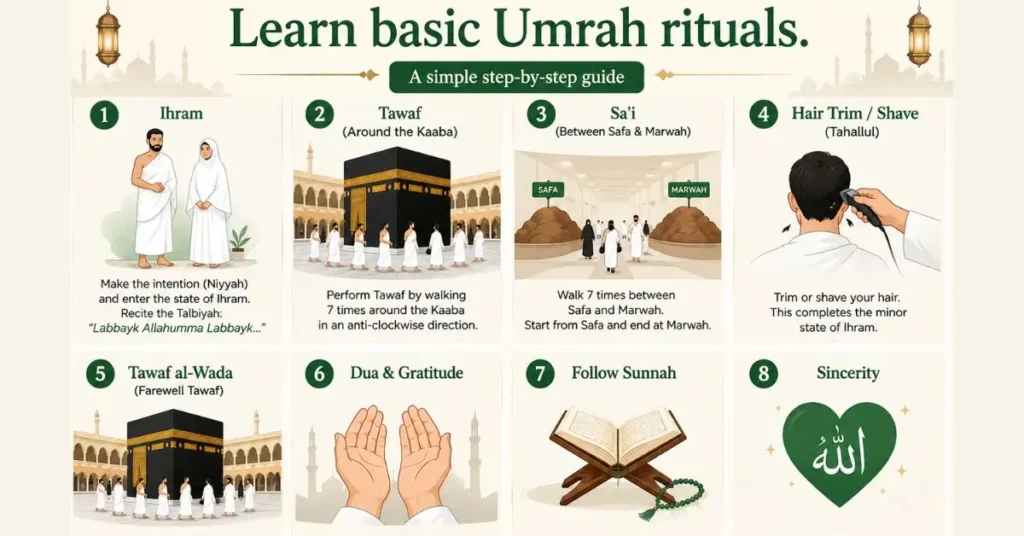
- Learn basic Umrah rituals.
- Pack Ihram clothing
- Carry essential items like prayer mats, unscented toiletries, and medicines.
- Keep physical fitness in mind, as walking is involved.
Spiritual preparation is equally important. Increase prayers, read the Qur’an regularly, and seek forgiveness before departure.
Entering the State of Ihram
Ihram is the sacred state you must enter before performing Umrah.
For Men:
- Wear two white, unstitched cloths.
For Women:
- Wear modest Islamic clothing covering the body (no specific colour required)
Before wearing Ihram:
- Perform ghusl (ritual purification)
- Trim nails and remove unwanted hair.
- Apply unscented perfume (before intention only)
Then make the intention for Umrah and recite Talbiyah:
“Labbaik Allahumma Labbaik…”
Once in Ihram, certain actions become prohibited, such as cutting hair, using perfume, or arguing.
Arrival in Makkah
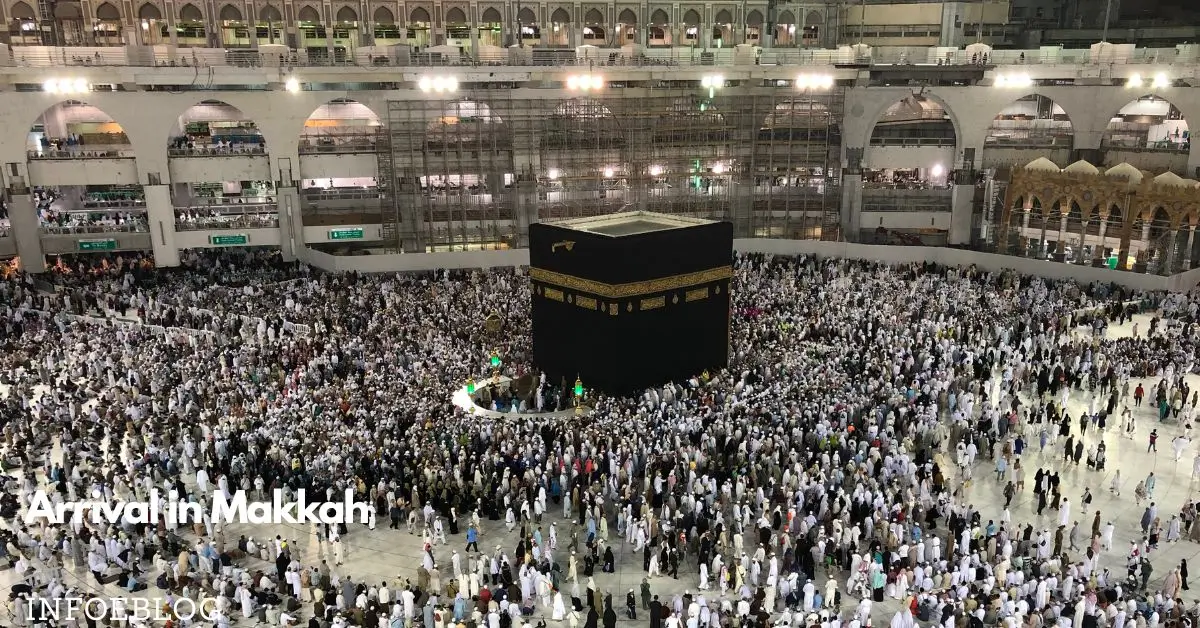
Upon arrival in Makkah, check in to your accommodation and rest if needed. It is recommended to enter Masjid al-Haram in a state of humility and focus.
Upon seeing the Kaaba for the first time, many pilgrims experience deep emotional moments. You may make personal duas at this point, as it is highly accepted.
Performing Tawaf (Circling the Kaaba)
Tawaf is the act of walking around the Kaaba seven times in an anti-clockwise direction.
Steps include:
- Start from the Black Stone (Hajar al-Aswad)
- Begin each round while facing it and saying “Bismillah Allahu Akbar”
- Perform seven complete circuits.
- Maintain focus and make personal supplications.
There is no fixed dua required, so you can recite Qur’an or make personal prayers throughout.
After completing Tawaf, offer two rak’ahs of prayer near Maqam Ibrahim if possible.
Drinking Zamzam Water
After Tawaf, drink Zamzam water, which is available throughout the mosque. It is a blessed water, and pilgrims often drink it while making sincere intentions for health, guidance, and forgiveness.
Performing Sa’i (Walking Between Safa and Marwah)
Sa’i involves walking between the hills of Safa and Marwah seven times.
Steps:
- Start at Safa and make dua facing the Kaaba.
- Walk to Marwah (this counts as one round)
- Return to Safa (second round)
- Repeat until seven rounds are completed.
Men are encouraged to walk briskly in designated areas, while women are encouraged to walk at a normal pace.
This ritual reflects the struggle of Hajar (RA), the wife of Prophet Ibrahim (AS).
Halq or Taqsir (Hair Cutting)
The final step of Umrah is removing a portion of hair.
- Men: Shave the head (Halq is preferred)
- Women: Cut a small portion of hair (about fingertip length)
This symbolises humility and completion of the pilgrimage.
Once this step is done, all restrictions of Ihram are lifted, and your Umrah is complete.
Spiritual Etiquette During Umrah
Throughout the journey:
- Maintain patience in crowds.
- Avoid arguments or negativity.
- Focus on worship and remembrance of Allah.
- Help fellow pilgrims when possible.
The environment can be crowded and physically demanding, but the reward lies in patience and sincerity.
Common Mistakes to Avoid
First-time pilgrims often make avoidable errors such as:
- Not learning rituals before travel.
- Rushing Tawaf or Sa’i
- Ignoring the Ihram restrictions
- Losing focus due to crowd pressure
Preparing in advance helps avoid these issues and makes your experience smoother.
Final Advice for First-Time Pilgrims
Performing Umrah is not just a physical journey but a spiritual transformation. Stay calm, follow the steps carefully, and keep your heart connected to Allah at every stage. Do not worry about perfection—focus on sincerity.
Every moment in Makkah is valuable, so make the most of your time in worship, prayer, and reflection.
Conclusion
Completing Umrah for the first time is a life-changing experience filled with spiritual rewards and personal reflection. With proper preparation, understanding of rituals, and a sincere heart, every pilgrim can perform it with ease and devotion. May your journey be accepted and filled with blessings, peace, and forgiveness.