
Introduction:
Creating content that ranks on search engines is more difficult than it used to be. Years ago, writers could repeat the same keyword several times and still rank well. Today, search engines are much smarter. They analyze context, search intent, topic depth, and semantic relevance.
This shift has changed how content creators approach SEO writing. Instead of focusing only on keywords, writers now need to create content that fully covers a topic naturally and clearly. That is where semantic SEO tools have become valuable.
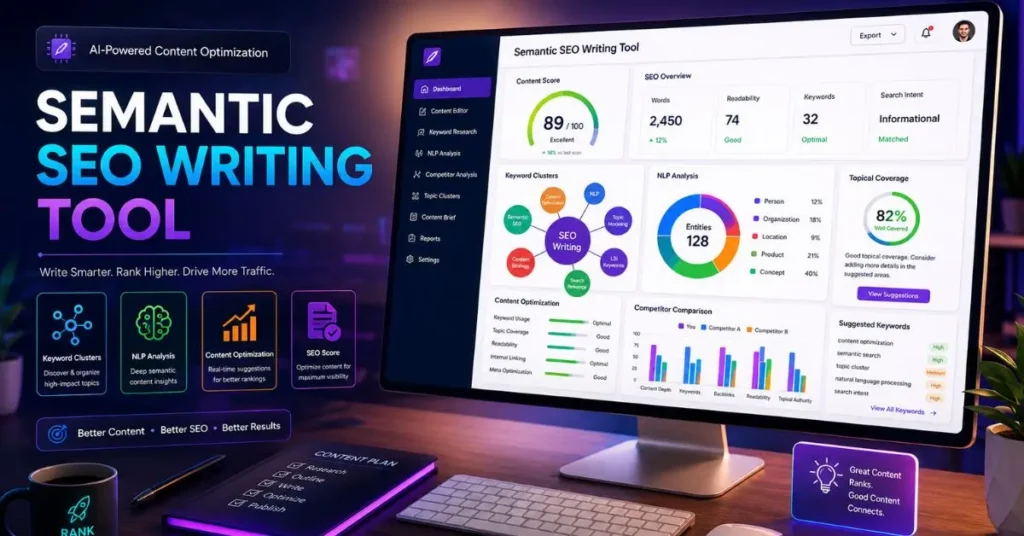
Many marketers, bloggers, affiliate site owners, and agencies now use AI-powered optimization tools to improve content structure, topical coverage, and readability. One tool that has gained attention in SEO discussions is the Ben Stace semantic SEO writing tool.
In this guide, you will learn what the tool is, how semantic SEO works, key features, benefits, limitations, and how content creators can use it more effectively.
Clear Definition
The Ben Stace semantic SEO writing tool is an SEO-focused content optimization system designed to help writers create semantically relevant articles that better match search intent and topical depth. It uses NLP concepts, keyword relationships, topic clusters, and content structure recommendations to improve search engine visibility while keeping content natural and readable for users.
What Is Semantic SEO?
Before understanding the software itself, it helps to understand semantic SEO.
Semantic SEO is the process of creating content around meaning, context, and related topics instead of focusing only on exact-match keywords.
For example, an article about “email marketing software” should naturally include related ideas such as:
- automation tools
- subscriber lists
- campaign analytics
- open rates
- conversion tracking
Search engines use these related terms to understand whether content truly covers the topic.
Modern SEO writing tools analyze these relationships and suggest ways to improve topical relevance.
Why Semantic SEO Matters Today
Google’s algorithms have evolved significantly over the past decade. Search engines now prioritize:
- Search intent
- Helpful content
- Topic authority
- User experience
- Natural language usage
This means shallow articles written only for keywords often struggle to rank.
Semantic optimization helps content feel more complete and useful.
For example, if someone searches for “best project management software,” they likely expect comparisons, features, pricing considerations, integrations, and usability details. A short article repeating one keyword will not satisfy that intent.
That is why semantic SEO tools have become more important for modern content strategies.
How the Tool Works
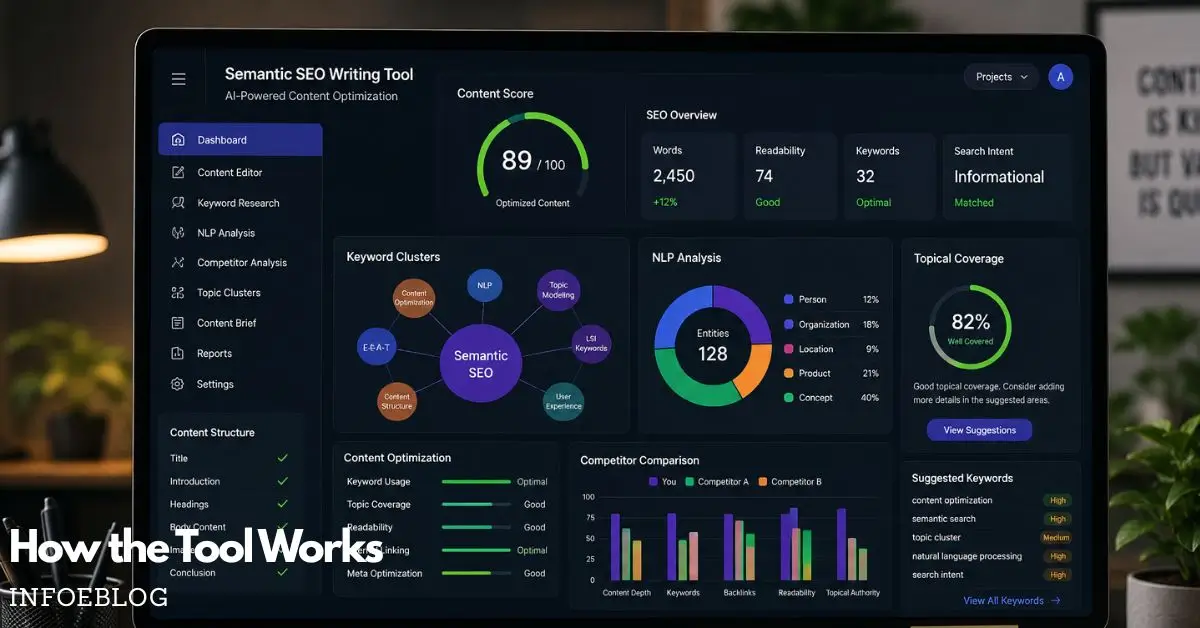
The Ben Stace semantic SEO writing tool analyzes content using NLP-style topic relationships and semantic relevance patterns.
Instead of simply counting keywords, the system looks at broader content quality signals.
Typical workflow includes:
| Feature | Purpose |
|---|---|
| Topic Analysis | Identifies related concepts and entities |
| Content Optimization | Suggests missing semantic terms |
| NLP Recommendations | Improves contextual relevance |
| Readability Review | Helps simplify content structure |
| Competitor Analysis | Compares topical coverage |
| Content Scoring | Evaluates SEO completeness |
The goal is not keyword stuffing. Instead, the tool encourages broader topic coverage in a natural way.
Key Features
Semantic Keyword Suggestions
One of the biggest advantages of semantic SEO software is related keyword discovery.
Instead of forcing the same phrase repeatedly, writers receive contextual suggestions connected to the main topic.
For example, an article about cybersecurity software may naturally include:
- data protection
- malware prevention
- endpoint security
- network monitoring
This creates more comprehensive content.
NLP-Based Content Analysis
Many modern optimization tools use Natural Language Processing concepts to analyze articles.
The Ben Stace semantic SEO writing tool helps identify whether content covers the expected subtopics users and search engines are looking for.
This can improve topical authority over time.
Competitor Content Comparison
Writers can compare their content structure against competing pages already ranking in search results.
This helps identify missing sections, weak explanations, or underdeveloped subtopics.
However, copying competitors directly is never recommended.
The best use case is understanding content depth expectations.
Readability Optimization
SEO content should rank well, but it also needs to remain easy to read.
Complex language often reduces engagement.
The software encourages:
- shorter paragraphs
- clearer headings
- simpler wording
- logical structure
This helps improve user experience.
Content Scoring Systems
Some semantic optimization platforms include scoring systems based on:
- topical coverage
- semantic relevance
- keyword variety
- heading structure
- readability
These scores are useful as guidelines, but they should not replace human judgment.
Who Should Use Semantic SEO Writing Tools?
Not every writer needs advanced optimization software.
However, these tools can be valuable for certain users.
Bloggers
Bloggers managing competitive niches often use semantic optimization tools to improve content depth.
This is especially useful in niches like:
- finance
- software
- health
- marketing
- technology
Affiliate Marketers
Affiliate websites compete heavily in search rankings.
Semantic SEO tools help affiliate content become more informative and complete instead of overly promotional.
SEO Agencies
Agencies handling multiple client websites often use optimization systems to standardize workflows and improve efficiency.
Freelance Writers
Freelancers can use semantic tools to produce more structured content for clients requiring SEO-focused articles.
Real-World Example
Imagine a US-based SaaS blog writing an article about “remote collaboration software.”
Without optimization tools, the writer may only discuss video meetings and chat features.
However, semantic analysis may reveal related concepts users expect, including:
- cloud collaboration
- file sharing
- team productivity
- workflow automation
- project tracking
Adding these naturally improves topic coverage and user satisfaction.
This is where semantic SEO systems provide practical value.
Benefits of Using the Tool
Better Topic Coverage
Semantic analysis helps writers create more complete articles instead of shallow keyword-focused content.
Improved Search Relevance
Related topic coverage helps search engines understand the content more clearly.
Reduced Keyword Stuffing
Writers focus less on repeating exact phrases and more on natural language variation.
Faster Content Planning
The software can reduce research time by identifying relevant subtopics quickly.
Better User Experience
Well-structured content is easier to read and often performs better in engagement metrics.
Limitations to Understand
No SEO tool is perfect.
The Ben Stace semantic SEO writing tool can improve optimization workflows, but it still has limitations.
AI Suggestions Are Not Always Perfect
Some recommendations may feel unnatural or unnecessary depending on the topic.
Human editing remains essential.
Tools Cannot Replace Expertise
Semantic coverage alone does not create high-quality content.
Real experience, examples, and trustworthy information still matter most.
Over-Optimization Risk
Some users chase optimization scores too aggressively.
This can lead to robotic writing if suggestions are forced unnaturally.
Best Practices for Using Semantic SEO Software
Focus on User Intent First
Always write for real users before optimizing for algorithms.
Helpful content performs better long term.
Use Suggestions Naturally
Do not insert every suggested keyword blindly.
Only use related terms where they fit naturally.
Add Real Examples
Real-world examples improve credibility and readability.
For example, software tutorials become stronger when showing actual workflows.
Keep Content Readable
Simple language usually performs better than overly technical explanations.
Short paragraphs and clear headings improve engagement.
Update Older Content
Semantic SEO tools are also useful for refreshing existing articles.
Writers can identify missing subtopics and improve outdated content.
Semantic SEO vs Traditional Keyword SEO
Traditional SEO focused heavily on exact-match keywords.
Modern SEO focuses more on topic understanding and search intent.
Here is the difference:
| Traditional SEO | Semantic SEO |
|---|---|
| Exact keyword repetition | Topic relevance |
| Short content | Comprehensive coverage |
| Basic optimization | Contextual optimization |
| Keyword density focus | User intent focus |
| Limited related terms | NLP and entity relationships |
This shift explains why semantic optimization tools continue growing in popularity.
Is the Tool Worth Using?
For serious content creators, semantic SEO software can be helpful.
It improves content planning, topical depth, and optimization workflows. However, the best results still come from combining software recommendations with human expertise.
Writers who rely entirely on automation often produce weak content.
The strongest SEO articles combine:
- semantic optimization
- practical knowledge
- clear writing
- real examples
- user-focused structure
That balance matters more than any tool score.
Frequently Asked Questions
What is the Ben Stace semantic SEO writing tool?
The Ben Stace semantic SEO writing tool is a content optimization platform designed to help writers improve semantic relevance, topical coverage, and SEO structure. It focuses on natural language optimization instead of simple keyword repetition.
The tool helps content creators build more complete and search-friendly articles using contextual topic analysis.
How does semantic SEO improve rankings?
Semantic SEO helps search engines better understand article context and topic relevance. Instead of relying only on exact keywords, search engines evaluate related concepts, search intent, and overall content depth.
Well-optimized semantic content often performs better because it answers user questions more completely.
Is semantic SEO better than keyword stuffing?
Yes. Keyword stuffing creates poor user experiences and can reduce content quality. Semantic SEO focuses on natural writing, contextual relevance, and complete topic coverage.
Modern search engines reward useful, readable, and informative content instead of repetitive keyword-heavy pages.
Can beginners use semantic SEO writing tools?
Yes. Most modern optimization platforms are designed for both beginners and advanced users. They usually provide recommendations for readability, structure, and related topics.
However, beginners should still focus on learning basic SEO principles instead of depending completely on software suggestions.
Does semantic SEO replace human writing?
No. Semantic tools help improve optimization, but they cannot replace real expertise, practical experience, or creative thinking.
Human editing remains important for accuracy, readability, tone, and trustworthiness.
Are semantic SEO tools useful for affiliate marketing?
Yes. Affiliate marketers often use semantic optimization software to create more informative content that better matches user intent.
This can improve both search visibility and audience trust when used properly.
Final Thoughts
Semantic SEO has changed how modern content is created and optimized. Writers now need to focus on context, user intent, topical depth, and readability instead of repeating keywords unnaturally.
The Ben Stace semantic SEO writing tool can support that process by helping writers build more structured and semantically relevant content. However, software alone is not enough. Real expertise, helpful explanations, and user-focused writing still matter most.
If used correctly, semantic optimization tools can become valuable assistants for bloggers, marketers, and businesses looking to improve content quality over time
Read also :