
Introduction:
Most people know they should floss. Most people also skip it. String floss is awkward, and it’s easy to give up after a few days.
That’s why handheld water flossers sell so well. A store-brand option looks tempting, especially when it costs less than the famous names. But CVS sells more than one cordless model, and the product pages don’t always explain the differences.
So what exactly is the CVS Health cordless water flosser, and is it a good fit for you? This guide covers the models, how they work, the pros and cons, and what to check before you pay.
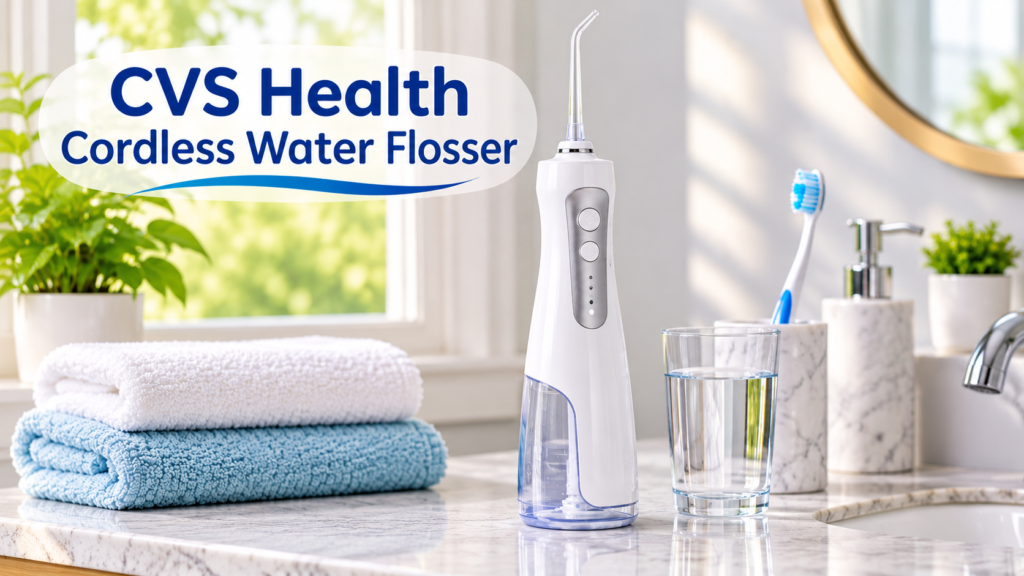
Quick definition: The CVS Health cordless water flosser is a handheld, store-brand oral irrigator. It shoots a thin stream of water between your teeth and along the gumline to wash out food and loosen plaque. It has no cord, so you can use it at the sink or while traveling. CVS sells several versions, some battery-powered and some rechargeable.
summary
- CVS sells at least three cordless water flossers: a battery model, a rechargeable model, and a kids’ model.
- The main listing says the battery model holds about 30 seconds of water per fill.
- It’s a good budget pick for travel and small bathrooms.
- It’s not a full replacement for brushing, and the product pages I found don’t mention an ADA Seal for the CVS models.
- If you have braces, implants, or gum disease, ask your dentist before you switch.
What the CVS cordless flosser models actually are
Many shoppers think there’s one product. There isn’t. Here is what I found on CVS’s own pages.
CVS Health HydroClean Cordless Water Flosser (item 638777). This model is battery operated, has a removable tank that gives 30 seconds of water, a push-button switch, and a quick-release tip change. It’s very light at about a third of a pound, and CVS markets it as a “compare to Waterpik” option. cvs
CVS Rechargeable Cordless Water Flossing System (item 378314). CVS describes this one as a compact, ergonomic handle with water jet action. It weighs about twice as much as the battery model. Third-party listings show it with two pressure settings, but I could not confirm the reservoir time or battery life from CVS’s page. Check the box or manual before you rely on those numbers. cvs
CVS Handheld Battery Water Flosser (item 541850). This one is aimed at kids 10 and up, with an easy grip and a one-button switch. It’s a separate product, so don’t buy it by mistake if you want an adult model. cvs
CVS also sells name brands like Waterpik in the same aisle, so the store-brand version is one choice among several.
How a cordless water flosser works
The idea is simple. You fill the small tank with warm water, lean over the sink, and aim the tip at the gumline. A tiny pump sends out a pulsing stream. The water pushes out food and helps loosen the soft film of plaque that sits between teeth.
You move the tip slowly from tooth to tooth. Most people spend about a minute per session. That’s about as long as a tank lasts on a small cordless unit.
A cordless flosser is not a mouthwash and not a toothbrush. It does one job: interdental cleaning, which means cleaning the tight spaces where a brush can’t reach well.
Is the CVS Health cordless water flosser worth buying?
For the right person, yes. For some people, a different tool is better.
It makes sense if you:
- Hate string floss and keep skipping it
- Have a small bathroom with no counter space
- Travel often and want something light
- Want a low-cost way to try a water flosser before spending more
It may not be the best pick if you:
- Have braces, bridges, or implants and need strong, adjustable pressure
- Want a large tank for a longer, calmer session
- Want a product with a well-known clinical track record
Here is a realistic example. Picture a college student in a shared Chicago apartment. The bathroom counter is tiny, and her roommate takes most of it. A battery-powered handheld unit like the HydroClean fits in a drawer, costs less than a name-brand countertop model, and gets her flossing again. For her, it’s a solid fit.
Now picture a man with a dental bridge who needs thorough cleaning every night. A small tank that runs out in 30 seconds will frustrate him. He’s better off with a larger unit or a model his dentist recommends.
CVS models vs. Waterpik: a quick comparison
Here is one table that sums up the main options. I used CVS’s own pages and Waterpik’s own product page.
| Model | Power | Water time per fill | Good to know |
|---|---|---|---|
| CVS HydroClean Cordless | Battery | About 30 seconds | Push-button, quick-release tip, very light |
| CVS Rechargeable Cordless | Rechargeable | Not listed on CVS’s page | Compact handle, heavier than the battery model |
| CVS Handheld Battery (kids) | Battery | Not listed | Made for ages 10 and up |
| Waterpik Cordless (WF-35W017) | Rechargeable | Up to 45 seconds on low | Waterproof, two settings, ADA accepted, and listed at $29.99 MSRP waterpik |
Waterpik’s page also notes its model has been accepted by the American Dental Association for safety and effectiveness. I did not find the same ADA statement on the CVS pages. That doesn’t mean the CVS models are unsafe. It means I can’t promise the same level of testing, so be honest with yourself about that trade-off.
Pros and cons of the CVS cordless flosser
Pros
- Lower cost. Store brands usually cost less than leading brands. Resale listings for the rechargeable CVS model show it around $15.99 new, though resale prices differ from CVS’s shelf price, so check the current price at CVS. ebay
- Light and portable. The battery model is easy to toss in a bag.
- Simple controls. One button, one tank, one tip. There’s little to learn.
- Easy to try. If you’re not sure you’ll like a water flosser, a cheaper model lowers the risk.
Cons
- Small tank. About 30 seconds of water means you may need to refill to finish your whole mouth.
- Fewer proven details. I could not confirm ADA acceptance, battery life, or pressure range from CVS’s own pages.
- Mixed model names. The listings use different names, which makes it easy to buy the wrong one.
- Battery model upkeep. Battery units need fresh batteries, which adds a small ongoing cost.
I’d be honest with anyone who asks: this is a good starter flosser, not a top-tier one.
How to use it so it actually works
A flosser only helps if you use it the right way. These steps work for most handheld units.
- Brush first, or floss first. Either order is fine. Pick one and stay consistent.
- Fill the tank with warm water. Cold water can sting sensitive teeth.
- Lean over the sink. Put the tip in your mouth before you turn it on. Close your lips lightly so water can drip out.
- Aim at the gumline. Hold the tip at a slight angle. Don’t blast straight down into the gums.
- Move slowly. Pause for a second between each pair of teeth.
- Do both sides of every tooth. Front and back, top and bottom.
- Rinse and empty the tank. Let it air dry.
If you see light bleeding in the first week, that’s common when gums are inflamed. If it keeps happening after one to two weeks of steady use, talk to your dentist.
Cleaning and care
A dirty flosser can grow mold in the tank, and a clogged tip weakens the stream.
Waterpik suggests running a vinegar and water mix through the unit about once a month and replacing tips every three to six months. That advice is for Waterpik units, so follow the manual that comes with your CVS model first. But the habit makes sense for any water flosser: clean it regularly, let it dry, and swap the tip on a schedule. waterpik
A simple weekly routine helps:
- Empty the tank after each use
- Wipe the handle
- Rinse the tip under warm water
Buying checklist before you pay
Use this short list before you check out. It also helps you decide whether the CVS Health cordless water flosser is the right model for you.
- Which exact model is it? Check the item number. Battery, rechargeable, and kids’ versions look similar online.
- How is it powered? Battery models need fresh batteries. Rechargeable models need a charging cable.
- How long does the tank last? Look for the water time on the box.
- Are there pressure settings? Two settings are better if your gums are sensitive.
- What’s the return policy? Store brands usually have a simple return window, and it’s worth checking.
- Does it come with extra tips? Spare tips save money later.
When to see a dentist first
A water flosser is a home-care tool, not a treatment. Talk to a dentist or hygienist if you have:
- Gums that bleed often or look swollen
- Bad breath that doesn’t go away
- Loose teeth or deep pockets between teeth
- Braces, implants, or a bridge
- A dental condition that needs special care
Your dentist can tell you whether a cordless unit is enough or whether you need a stronger countertop model.
Frequently Asked Questions
Is the CVS Health cordless water flosser any good?
It’s a decent budget option for basic cleaning between teeth. CVS describes the battery model as portable, with a 30-second tank and a quick-release tip. It’s best for casual use and travel. For braces, implants, or gum disease, ask your dentist about a more powerful, well-tested model.
Reviews and prices change, so check current ratings before you buy.
Does the CVS cordless water flosser replace string floss?
For some people it can, but not for everyone. Water flossers clean between teeth well and are easier to use than string. Still, some dentists recommend string floss for tight spots. Ask your dentist which option fits your teeth and gums, especially if you have dental work.
How long does the tank last on a CVS cordless flosser?
The CVS HydroClean battery model has a removable tank that lasts about 30 seconds per fill. That’s enough for a short session, and you may need to refill once. CVS’s page for the rechargeable model doesn’t list the water time, so check the box or manual.
Can you use mouthwash in a CVS water flosser?
Check your manual first. CVS’s listing says the flosser can help prevent gingivitis when used with an anti-gingivitis mouth rinse, which suggests rinse is part of the routine. But many brands warn against putting additives in the tank because they can clog parts. Plain warm water is the safest choice.
Is a CVS cordless water flosser better than a Waterpik?
Not necessarily. CVS’s version usually costs less, while Waterpik has a longer track record and its cordless model lists ADA acceptance. For simple travel use, either can work. For heavier needs like implants or braces, a Waterpik or dentist-recommended model is the safer pick.
Final thoughts
The CVS Health cordless water flosser is a simple, low-cost way to start cleaning between your teeth. It’s light, easy to use, and good for travel or small spaces.
It also has limits. The tank is small, the models are easy to mix up, and I couldn’t confirm the same testing details that come with a brand like Waterpik. Pick the exact model that fits your needs, use it daily, and talk to your dentist if you have special dental work or ongoing gum problems.
Also Read this;