
Introduction:
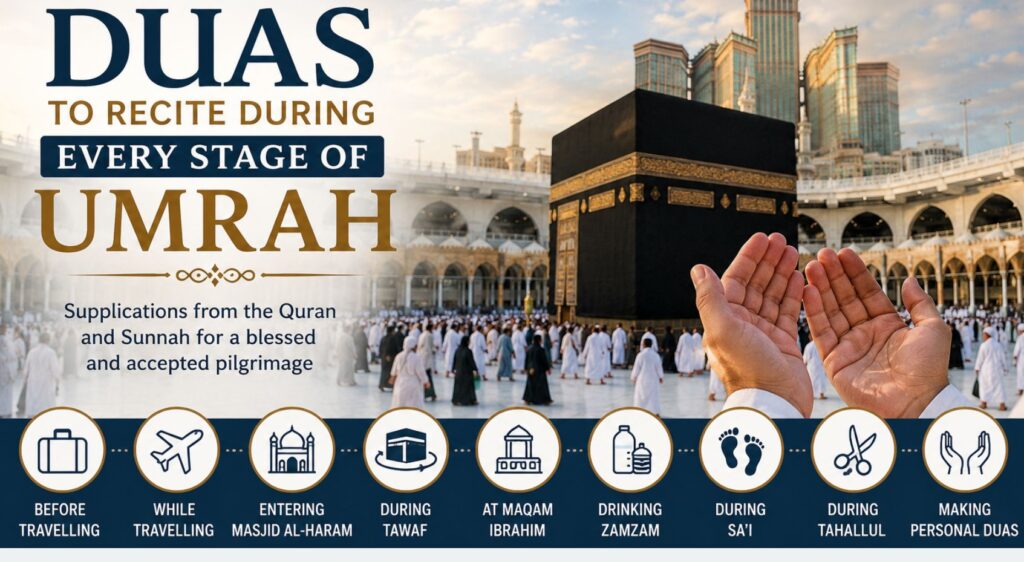
Duas to recite during umrah is a deeply spiritual journey that allows Muslims to draw closer to Allah (SWT), seek forgiveness, and renew their faith. Every act of Umrah is an opportunity to engage in remembrance of Allah through sincere supplications. Learning the essential duas for each stage of Umrah can help pilgrims maximize the blessings of this sacred journey.
For Muslims in the UK preparing for this spiritual experience, selecting reliable Umrah Packages can make travel arrangements smoother and allow more focus on worship. Alongside practical preparation, understanding the recommended duas from the Quran and Sunnah helps ensure a meaningful and rewarding pilgrimage.
The Importance of Dua During Umrah
Dua is one of the greatest acts of worship. Allah says in the Quran:
“Call upon Me; I will respond to you.” (Quran 40:60)
During Umrah, believers visit the sacred cities of Makkah and Madinah, where opportunities for accepted supplications are abundant. While there are specific duas taught in the Sunnah for certain rituals, pilgrims are also encouraged to make personal supplications in their own language.
Dua Before Leaving Home
Before beginning the journey, Muslims should seek Allah’s protection and blessings. The Prophet Muhammad ﷺ taught the following supplication when leaving home:
Arabic
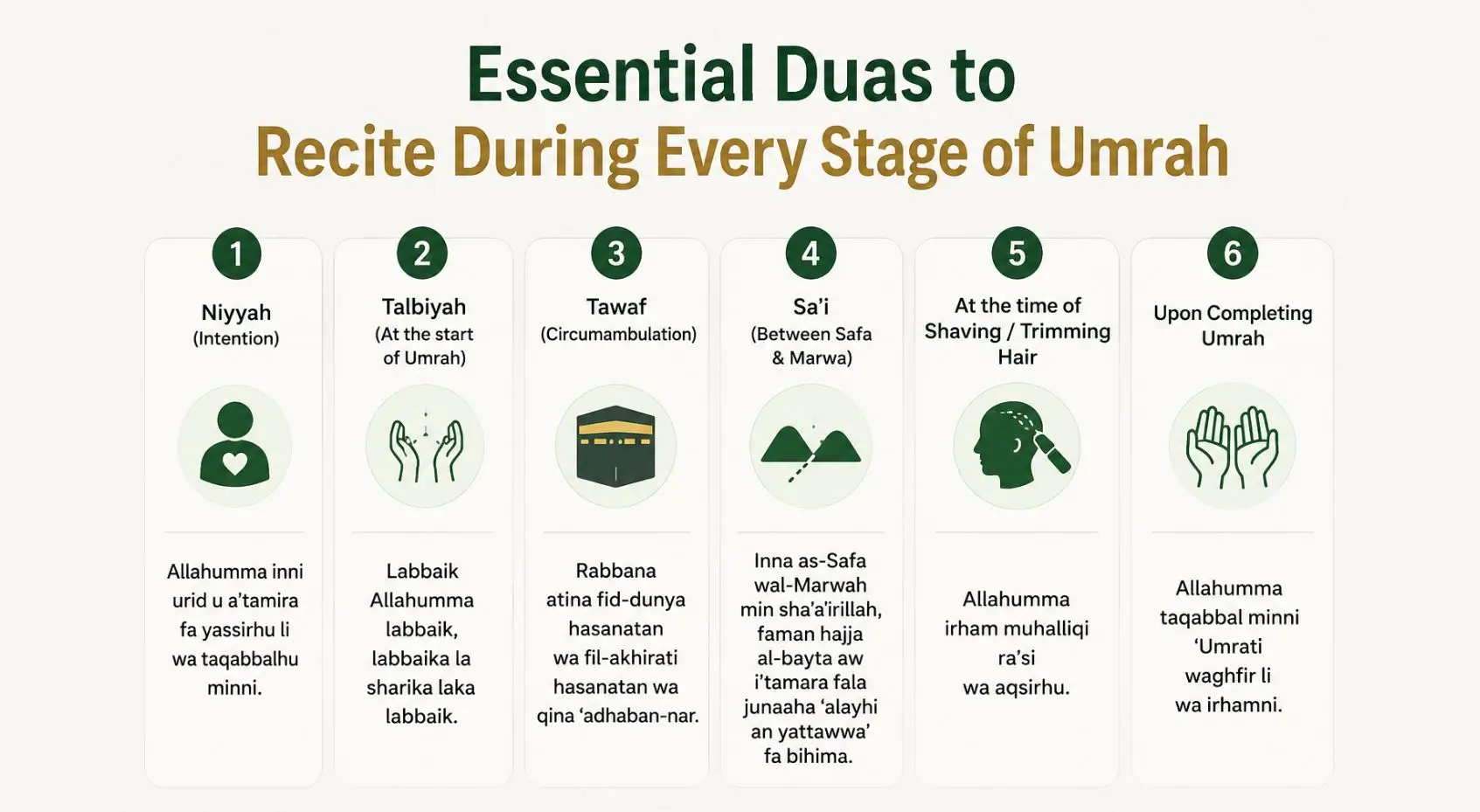
بِسْمِ اللَّهِ، تَوَكَّلْتُ عَلَى اللَّهِ، لَا حَوْلَ وَلَا قُوَّةَ إِلَّا بِاللَّهِ
Translation
“In the name of Allah, I place my trust in Allah. There is no power and no strength except with Allah.”
This dua asks Allah for guidance and protection throughout the journey.
Dua While Travelling
The Prophet ﷺ recited a travel supplication whenever embarking on a journey.
Arabic
اللَّهُ أَكْبَرُ، اللَّهُ أَكْبَرُ، اللَّهُ أَكْبَرُ
Translation
“Allah is the Greatest, Allah is the Greatest, Allah is the Greatest.”
The complete travel dua includes praise of Allah and a request for ease, righteousness, and protection. Pilgrims should recite it during flights from the UK to Saudi Arabia and throughout their travels.
Dua Upon Entering Masjid al-Haram
Seeing the Kaaba for the first time is an emotional moment for many pilgrims. While there is no authenticated special dua specifically for the first sight of the Kaaba, scholars encourage believers to make sincere personal supplications because it is a blessed occasion.
One may begin with praise of Allah and send blessings upon the Prophet ﷺ before making personal requests.
Duas During Tawaf
Tawaf is one of the central rituals of Umrah. Pilgrims circle the Kaaba seven times while engaging in dhikr and dua.
Between the Yemeni Corner and the Black Stone
The Prophet ﷺ frequently recited:
Arabic
رَبَّنَا آتِنَا فِي الدُّنْيَا حَسَنَةً وَفِي الْآخِرَةِ حَسَنَةً وَقِنَا عَذَابَ النَّارِ
Translation
“Our Lord, grant us good in this world and good in the Hereafter and protect us from the punishment of the Fire.” (Quran 2:201)
For the remainder of Tawaf, pilgrims may recite Quran, make dhikr, or offer personal supplications.
Dua at Maqam Ibrahim
After completing Tawaf, pilgrims pray two rak’ahs behind Maqam Ibrahim if possible. During these prayers and afterward, they should ask Allah for forgiveness, guidance, and steadfastness.
This is a valuable time to reflect on the devotion of Prophet Ibrahim (AS) and his complete submission to Allah.
Dua While Drinking Zamzam
The Prophet ﷺ said:
“The water of Zamzam is for whatever it is drunk for.”
Pilgrims should drink Zamzam with sincere intentions and make dua for beneficial knowledge, good health, forgiveness, and success in this life and the next.
Duas During Sa’i Between Safa and Marwah
Sa’i commemorates the struggle of Hajar (AS) as she searched for water for her son Ismail (AS).
At Safa and Marwah
Pilgrims recite:
Arabic
إِنَّ الصَّفَا وَالْمَرْوَةَ مِن شَعَائِرِ اللَّهِ
Translation
“Indeed, Safa and Marwah are among the symbols of Allah.” (Quran 2:158)
They then praise Allah, declare His greatness, and make personal duas. This is repeated at both Safa and Marwah throughout the seven circuits.
Dua During Tahallul (Shaving or Trimming the Hair)
The final stage of Umrah is Tahallul, where men shave or trim their hair and women cut a small portion of theirs.
The Prophet ﷺ made dua three times for those who shaved their heads and once for those who trimmed their hair, highlighting the virtue of completing this ritual sincerely.
At this stage, pilgrims should thank Allah for enabling them to complete Umrah and ask Him to accept their worship.
Making Personal Duas Throughout Umrah
One of the greatest benefits of Umrah is the opportunity to make heartfelt personal supplications. Pilgrims should ask Allah for:
- Forgiveness of sins
- Guidance and steadfastness
- Good health and well-being
- Success for their families
- Acceptance of worship
- Ease in worldly and spiritual matters
Many Muslims travelling from Britain choose umrah packages for December because of holiday schedules and cooler weather. Regardless of the season, the most important preparation is spiritual readiness and a sincere intention to seek Allah’s pleasure.
Conclusion
Umrah is a journey of worship, reflection, and renewal. By reciting the authentic duas taught in the Quran and Sunnah at every stage of the pilgrimage, Muslims can strengthen their connection with Allah and increase the rewards of their worship. Whether before departure, during Tawaf, throughout Sa’i, or after completing the rituals, every moment presents an opportunity to call upon Allah with humility and hope. May Allah accept the Umrah of all pilgrims and grant them a safe and blessed journey. Ameen.