
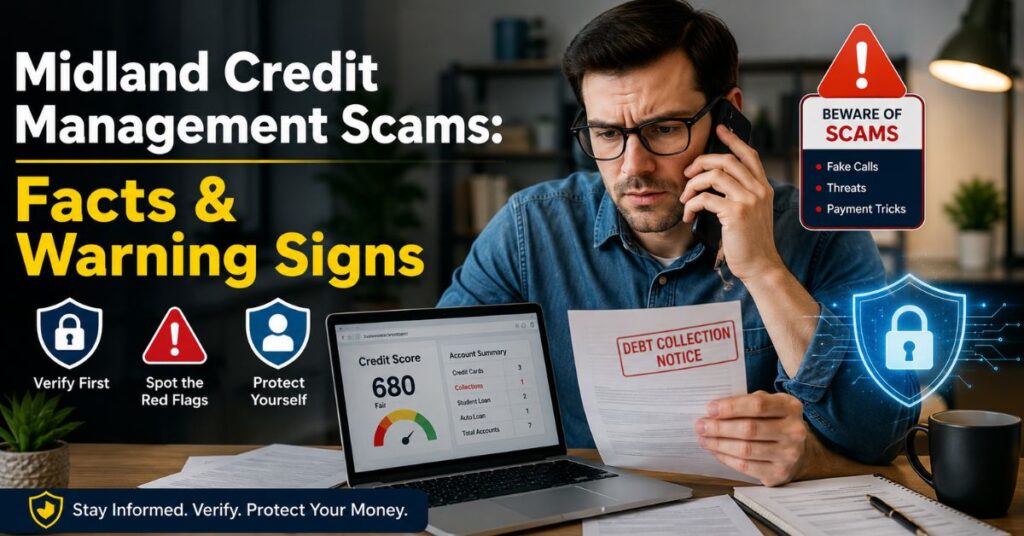

Introduction
Receiving a phone call or letter about an old debt can be stressful. Many people immediately wonder whether the debt is real or if someone is trying to steal their personal information. This concern has become more common as phone scams, fake emails, and identity theft continue to rise across the United States.
Many consumers search for midland credit management scams because they want to know whether the company is legitimate or whether fraudsters are pretending to represent it. Understanding the difference is important because responding to a real debt collector requires a different approach than dealing with a scammer.
This guide explains how Midland Credit Management works, common scam tactics, warning signs to watch for, your consumer rights, and practical steps you can take to protect yourself.
What Is Midland Credit Management?
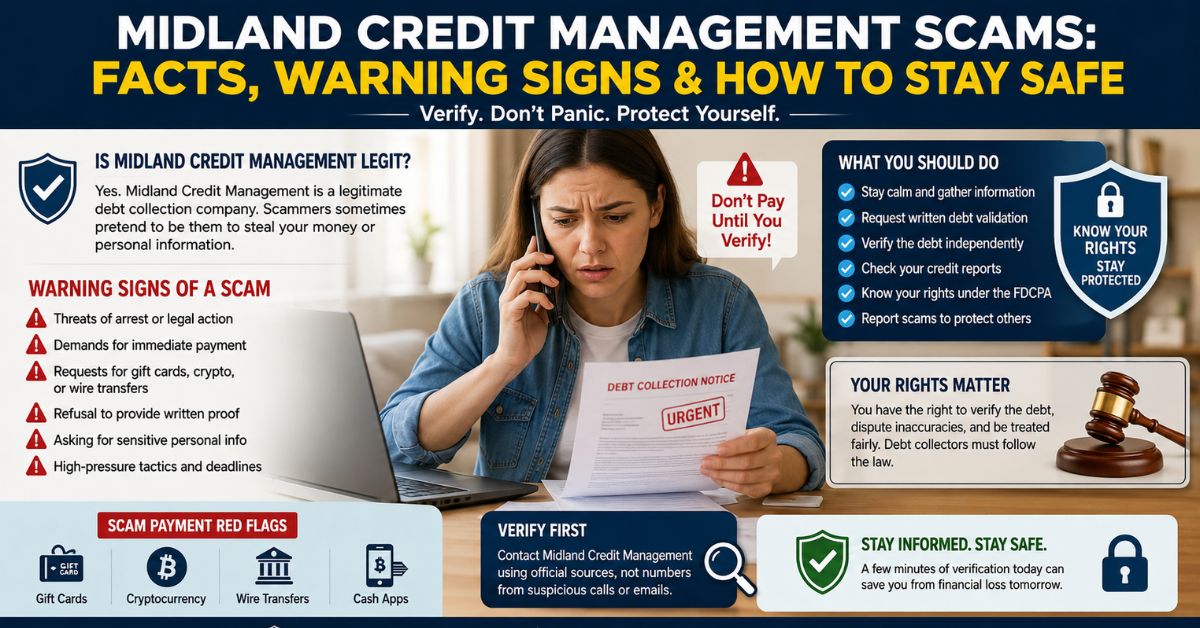
Midland Credit Management (MCM) is a legitimate debt collection company that works with consumers to recover unpaid debts purchased from original creditors. While the company is legally allowed to collect qualifying debts, scammers sometimes pretend to represent MCM to steal money or personal information. Knowing how to verify communication helps you avoid fraud while protecting your legal rights.
summary
- Midland Credit Management is a real debt collection company.
- Scammers sometimes impersonate legitimate collectors.
- Never pay a debt without verifying it first.
- Request written debt validation before making payments.
- Know your rights under federal consumer protection laws.
- Watch for pressure tactics, threats, and unusual payment requests.
Understanding Midland Credit Management
Midland Credit Management is part of Encore Capital Group, a financial services company that purchases unpaid consumer debt from banks, credit card companies, retailers, and other lenders.
When an original creditor decides not to continue collecting an unpaid balance, it may sell that debt to another company. Midland Credit Management then becomes responsible for contacting consumers and offering repayment options.
This process is legal and common throughout the United States.
However, because the company is well known, scammers often use its name to trick people into sending money.
That is one reason searches for midland credit management scams have increased over the years.
The important point is this:
A legitimate debt collector and a scammer pretending to be one are not the same thing.
Understanding that difference can prevent expensive mistakes.
Why Do People Think Midland Credit Management Is a Scam?
Many online complaints do not necessarily mean a company is fraudulent.
Debt collection is naturally stressful. Consumers who receive unexpected collection notices may assume something is wrong, especially if they don’t remember the debt.
Several situations can create confusion.
Old Debts
Some debts are several years old before they are sold to another collection agency.
A person may honestly forget opening the account years earlier.
Identity Theft
Someone else’s fraudulent activity may appear on your credit history.
If identity theft occurred, the debt might not belong to you at all.
Credit Report Errors
Credit reporting mistakes happen occasionally.
Incorrect balances or account information can make a collection notice seem suspicious.
Scam Calls
Perhaps the biggest source of confusion comes from scammers using the names of legitimate businesses.
Fake collectors know consumers recognize large companies.
Pretending to represent a known organization increases the chance that victims will believe them.
Legitimate Debt Collection vs. Scam Activity
Many people panic after receiving a collection call.
Instead of reacting immediately, compare the communication with normal debt collection practices.
| Legitimate Collection | Possible Scam |
|---|---|
| Provides company information | Refuses to identify company |
| Explains the debt | Gives vague details |
| Sends written validation | Refuses written proof |
| Allows verification | Demands immediate payment |
| Accepts standard payment methods | Requests gift cards, crypto, or wire transfers |
| Follows consumer protection laws | Uses threats and intimidation |
This simple comparison helps separate normal collection efforts from suspicious behavior.
Common Scam Tactics Using Midland Credit Management’s Name
Fraudsters constantly change their methods.
However, many scams follow familiar patterns.
Understanding these warning signs makes them easier to recognize.
1. Fake Phone Calls
Someone claims to represent Midland Credit Management.
They may sound professional and already know your name, address, or phone number.
This information is often available from previous data breaches.
The caller pressures you to pay immediately before you have time to think.
Example:
A caller says you owe an old credit card balance and must pay today or face legal action.
They refuse to provide written proof.
That is a major warning sign.
2. Threats of Immediate Arrest
Debt collectors cannot have someone arrested simply because they owe money.
Scammers often threaten:
- Arrest
- Jail
- Criminal charges
- Police action
- Immigration consequences
These scare tactics are designed to create panic.
When people are frightened, they are more likely to pay without asking questions.
3. Demanding Unusual Payment Methods
Legitimate companies generally provide secure payment options.
Scammers often request:
- Gift cards
- Cryptocurrency
- Wire transfers
- Cash apps
- Prepaid debit cards
These payment methods are difficult or impossible to recover once the money has been sent.
That alone should raise serious concerns.
4. Refusing Debt Validation
Federal law gives consumers the right to request information about a debt.
A legitimate collector should provide documentation explaining:
- The original creditor
- The amount owed
- Account information
- Your rights
A scammer usually avoids these requests.
Instead, they continue demanding immediate payment.
5. High-Pressure Deadlines
Scammers create fake emergencies.
You may hear statements such as:
- “You have one hour.”
- “Pay today or you’ll be sued.”
- “This offer expires in thirty minutes.”
Real debt collection rarely works this way.
Consumers normally have time to review documents before making decisions.
6. Asking for Sensitive Personal Information
Another common fraud involves identity theft.
Rather than collecting a debt, scammers attempt to steal:
- Social Security numbers
- Bank account details
- Debit card PINs
- Online banking passwords
- Security verification codes
Never provide this information during an unexpected phone call.
How to Verify Whether a Debt Is Real
If someone contacts you about a debt, don’t assume the communication is either legitimate or fake.
Instead, verify everything carefully.
Request Written Validation
Federal law allows consumers to ask for written information explaining the debt.
Review every detail before sending money.
Compare Information
Look at your own records.
Ask yourself:
- Did I actually open this account?
- Does the balance seem correct?
- Do I recognize the original creditor?
Even if you think the debt is yours, verify the details first.
Contact the Company Directly
Never rely on the phone number provided by an unexpected caller.
Instead, find official contact information through trusted sources and verify whether the communication is genuine.
This simple step can prevent many fraud attempts.
Review Your Credit Report
Your credit report may show collection accounts, original creditors, and account history.
Comparing that information with the collection notice helps identify possible errors.
Don’t Rush
One of the biggest mistakes consumers make is paying immediately because they feel pressured.
Take time to verify the situation.
Legitimate companies understand that consumers have questions.
Scammers do not.
Your Rights Under Federal Law
Consumers in the United States have important protections when dealing with debt collectors.
The Fair Debt Collection Practices Act (FDCPA) limits what debt collectors can do.
Some important protections include:
- The right to request debt validation.
- Protection from harassment.
- Protection against false or misleading statements.
- Limits on communication times.
- Protection from abusive language.
- The right to dispute inaccurate debts.
Knowing these rights helps you respond with confidence rather than fear.
Red Flags That Should Never Be Ignored
When evaluating possible midland credit management scams, watch carefully for these warning signs:
- Threats of arrest.
- Requests for cryptocurrency.
- Pressure to pay immediately.
- Refusal to provide written proof.
- Caller refuses to identify themselves.
- Unexpected collection notices for unfamiliar accounts.
- Demands for passwords or Social Security information.
- Aggressive behavior when you ask questions.
One warning sign may not prove fraud.
Several warning signs together deserve serious attention.
A Realistic Example
Imagine Sarah receives a phone call claiming she owes $2,400 on a credit card from eight years ago.
The caller demands payment within one hour using gift cards.
When Sarah asks for written proof, the caller refuses and threatens legal action.
Instead of paying immediately, Sarah hangs up, checks her credit report, and contacts the company’s official customer service number.
She learns that no such account exists.
Because she verified the information first, she avoided becoming the victim of a scam.
What to Do If You Receive a Suspicious Collection Call
If someone claims to represent a debt collection company, stay calm and avoid making immediate decisions. Scammers often rely on fear and urgency to pressure people into paying before they verify the facts.
Follow these practical steps:
1. Stay Calm and Listen
Don’t argue or panic. Write down:
- The caller’s name
- Company name
- Phone number
- Account number (if provided)
- Amount they claim you owe
Having this information makes it easier to verify later.
2. Ask for Written Debt Validation
Under the Fair Debt Collection Practices Act (FDCPA), you have the right to request written information about the debt.
The notice should include:
- The original creditor’s name
- The amount owed
- Your rights to dispute the debt
- Instructions for requesting verification
If the caller refuses to provide written documentation, treat it as a major warning sign.
3. Never Share Sensitive Information
Even if the caller sounds convincing, never give out:
- Social Security number
- Online banking password
- Debit card PIN
- One-time security codes
- Tax identification numbers
Legitimate businesses do not ask for passwords or verification codes over the phone.
4. Verify the Information Yourself
Instead of trusting the phone number provided by the caller, find the company’s official contact information independently.
Ask whether:
- The account exists
- The balance is accurate
- They recently attempted to contact you
This simple step can prevent financial loss.
5. Check Your Credit Reports
Review your credit reports for collection accounts or unfamiliar debts.
If you notice incorrect information, dispute it with the credit reporting agency as soon as possible.
What If the Debt Is Actually Yours?
Sometimes the debt is legitimate.
If verification confirms the account belongs to you, don’t ignore it.
Instead:
- Review the balance carefully.
- Ask about payment options.
- Request any available settlement offers.
- Keep copies of every agreement.
- Save payment confirmations.
Paying only after proper verification protects both your money and your legal rights.
What If It Is a Scam?
If you determine the contact was fraudulent, stop communicating immediately.
Then take these steps:
- Block the phone number.
- Keep screenshots, emails, or voicemails.
- Report the scam to the appropriate consumer protection agencies.
- Monitor your financial accounts.
- Change passwords if you shared any account information.
- Watch your credit reports for suspicious activity.
Quick action can reduce the risk of identity theft.
Common Myths About Debt Collection
Many misunderstandings cause unnecessary fear. Let’s separate facts from fiction.
| Myth | Reality |
|---|---|
| Every collection call is a scam. | Many collection agencies operate legally under federal law. |
| You can be arrested for unpaid consumer debt. | Consumer debt alone does not result in arrest. |
| You must pay immediately. | You have the right to verify the debt first. |
| Ignoring every collection notice makes it disappear. | Legitimate debts may continue through legal collection processes. |
| Every complaint online means a company is fraudulent. | Complaints often reflect customer experiences but do not automatically prove fraud. |
Tips to Protect Yourself from Debt Collection Fraud
Scammers constantly change their tactics, but these habits can help keep you safe.
Verify Before Paying
Never send money based only on a phone call.
Always confirm the debt independently.
Keep Financial Records
Save old account statements, loan documents, and payment receipts.
These records make it easier to recognize incorrect collection claims.
Monitor Your Credit Regularly
Checking your credit reports helps you identify unfamiliar accounts early.
Early detection reduces the risk of long-term financial damage.
Be Careful with Personal Information
Identity thieves often combine information from social media, public records, and previous data breaches.
Share personal details only when you’re certain you’re communicating with a legitimate organization.
Learn Your Consumer Rights
Knowing your rights under federal consumer protection laws helps you respond confidently rather than emotionally.
Scammers often succeed because people don’t realize they have legal protections.
Pros and Cons of Working with a Legitimate Debt Collector
Like many financial situations, there are both advantages and disadvantages.
Pros
- Opportunity to resolve outstanding debts.
- Possible payment plans.
- Potential settlement options.
- Clear documentation of repayment.
- May help resolve long-term financial obligations.
Cons
- Collection calls can be stressful.
- Old debts may be difficult to remember.
- Credit reports may already be affected.
- Mistakes sometimes require disputes and verification.
- Scammers may imitate legitimate companies.
Understanding both sides helps you make informed decisions.
Frequently Asked Questions
Is Midland Credit Management a legitimate company?
Yes. Midland Credit Management is a legitimate debt collection company. However, scammers sometimes pretend to represent legitimate businesses, which is why every communication should be verified before making a payment.
Always request written validation and verify the account independently. Never rely only on information provided during an unexpected phone call.
How can I identify Midland Credit Management scams?
Watch for pressure tactics, threats, requests for gift cards or cryptocurrency, refusal to provide written proof, and demands for immediate payment. These are common warning signs of fraud.
A legitimate collector should allow you time to verify the debt and explain your consumer rights.
Can debt collectors threaten arrest?
No. Consumer debt alone does not lead to arrest. Anyone threatening jail or criminal charges simply because you owe money should be treated with extreme caution.
If you receive these threats, document the conversation and report the incident to the appropriate authorities.
Should I pay a debt immediately?
No. Always verify the debt before making any payment. Request written documentation and confirm the information through official channels.
Paying without verification may result in losing money to scammers or paying an incorrect balance.
What happens if I believe the debt is incorrect?
You have the right to dispute the debt and request validation. Do not ignore the notice, but do not assume it is accurate either.
Keep copies of all correspondence and review any documents you receive carefully.
Can scammers know my personal information?
Yes. Fraudsters often obtain names, addresses, or phone numbers from previous data breaches or public records. Knowing basic information does not prove the caller is legitimate.
Continue verifying the debt instead of trusting the caller simply because they know personal details.
Final Thoughts
Searching for midland credit management scams does not automatically mean the company itself is fraudulent. In many cases, consumers are trying to determine whether a collection notice is legitimate or whether someone is impersonating a real business.
The safest approach is always the same: verify the debt, request written documentation, understand your rights, and never allow fear or urgency to influence your decision. A few extra minutes spent checking the facts can protect your finances and your personal information.