
Introduction:
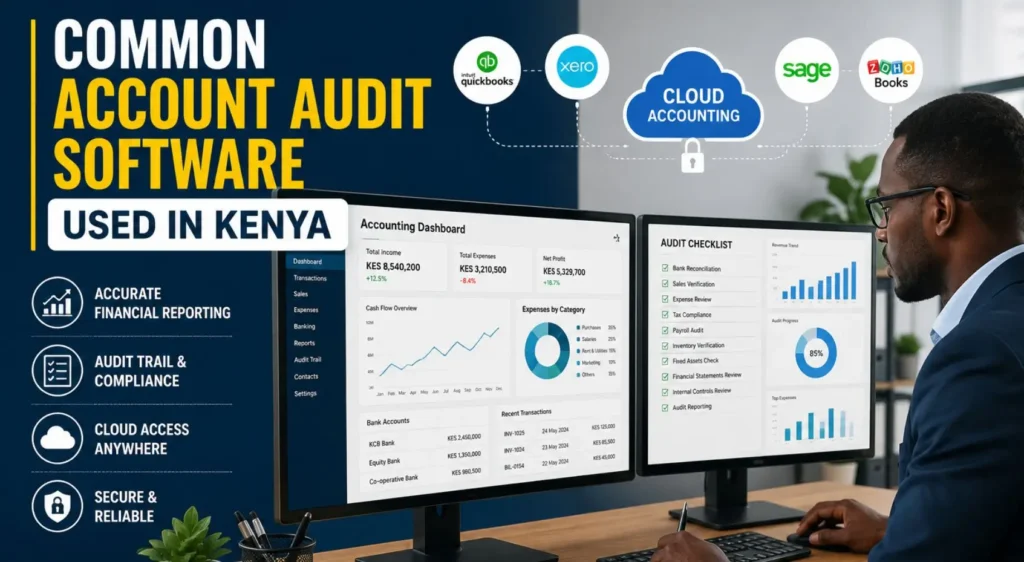
Managing business finances is not just about recording income and expenses. Companies also need accurate audits to make sure their financial records are complete, organized, and compliant with regulations. This is where common account audit software used in Kenya becomes valuable.
Many businesses still rely on spreadsheets or manual record-keeping, which increases the risk of mistakes. Even a small accounting error can lead to tax problems, incorrect financial reports, or failed audits.
Modern audit software helps businesses automate financial reviews, organize accounting records, and improve reporting accuracy. Whether you run a small business, a growing company, or an accounting firm, choosing the right software can save time and reduce costly errors.
In this guide, you’ll learn how audit software works, which platforms are commonly used in Kenya, what features matter most, and how to choose the best solution for your business.
What Is Account Audit Software?
Account audit software is a digital tool that helps accountants and auditors review financial records, identify errors, verify transactions, and prepare audit reports. It also improves compliance by organizing financial data and reducing manual work.
Unlike traditional spreadsheets, audit software stores information securely, tracks changes automatically, and generates reports much faster. Many modern platforms also connect directly with accounting systems, making the audit process smoother and more reliable.
summary
- Audit software simplifies financial reviews.
- It improves reporting accuracy.
- Many Kenyan businesses use cloud-based accounting systems.
- Popular platforms include QuickBooks, Sage, Xero, Zoho Books, and CaseWare.
- The best choice depends on company size, budget, and reporting needs.
- Cloud solutions offer better collaboration and security than manual systems.
Why Businesses Need Audit Software
Financial audits are becoming more detailed every year. Companies must maintain accurate records while meeting legal and tax requirements.
Without proper software, businesses often face problems such as:
- Missing financial records
- Duplicate transactions
- Incorrect balances
- Slow report preparation
- Difficulty tracking changes
- Human errors
Audit software solves these issues by automating repetitive tasks and creating a reliable digital record of financial activity.
For example, imagine a retail company with hundreds of daily transactions. Reviewing each transaction manually could take several weeks. Audit software automatically checks records, flags unusual entries, and generates reports in much less time.
Features to Look for in Audit Software
Not every accounting solution offers strong audit capabilities. Before choosing a platform, consider the features that matter most.
Cloud Access
Cloud-based software allows accountants, managers, and auditors to work from different locations. This is especially useful for companies with multiple offices.
Automated Audit Trails
Every financial change should be recorded automatically.
Audit trails help businesses:
- Track edits
- Identify who made changes
- Reduce fraud risks
- Improve transparency
These records are extremely valuable during internal and external audits.
Financial Reporting
Good software should generate reports such as:
- Balance sheets
- Profit and loss statements
- Cash flow reports
- Trial balances
- Audit summaries
Clear reports make decision-making much easier.
Security
Financial information is highly sensitive.
Choose software that includes:
- User permissions
- Data encryption
- Secure cloud storage
- Backup systems
- Multi-factor authentication
These features help protect company data from unauthorized access.
Integration
Many businesses already use payroll, invoicing, or inventory software.
The best audit tools integrate with existing systems so financial information stays synchronized automatically.
Common Account Audit Software Used in Kenya
Many organizations choose internationally recognized accounting platforms because they offer reliable audit features and strong financial reporting.
Below are some of the most popular solutions.
| Software | Best For | Main Strength |
|---|---|---|
| QuickBooks | Small businesses | Easy accounting and reporting |
| Sage | Medium businesses | Financial management and compliance |
| Xero | Cloud accounting | Multi-user collaboration |
| Zoho Books | Growing companies | Automation and affordability |
| CaseWare | Professional auditors | Advanced audit management |
QuickBooks
QuickBooks is one of the most widely used accounting platforms worldwide.
Small businesses appreciate its simple interface and detailed financial reports.
Benefits include:
- Expense tracking
- Invoice management
- Tax preparation
- Financial statements
- Bank synchronization
Many accounting firms also use QuickBooks data when preparing audits because financial records are organized and easy to review.
Sage
Sage has been trusted by businesses for many years.
It supports:
- Payroll
- Inventory
- Financial reporting
- Budget planning
- Audit preparation
Larger businesses often choose Sage because it offers stronger financial controls and more advanced reporting features than entry-level accounting software.
Xero
Xero is a cloud-based accounting platform known for its modern design and excellent collaboration features.
Business owners, accountants, and auditors can access the same financial information in real time.
Key advantages include:
- Automatic bank feeds
- Online invoices
- Expense tracking
- Audit-friendly reporting
- Cloud backups
For companies with remote teams, Xero provides excellent flexibility.
Zoho Books
Zoho Books is becoming increasingly popular among startups and growing businesses.
It combines affordability with automation.
Useful features include:
- Workflow automation
- Expense management
- Invoice creation
- Tax calculations
- Financial dashboards
Because the platform is cloud-based, businesses can review financial records from almost anywhere.
CaseWare
CaseWare focuses specifically on professional auditing rather than general accounting.
Accounting firms often use it for:
- Risk assessments
- Audit documentation
- Compliance testing
- Financial analysis
- Working papers
Although it requires more training than standard accounting software, it provides advanced capabilities for experienced auditors.
How Businesses Choose the Right Audit Software
No single solution works for every company.
Instead, businesses should evaluate their needs based on several factors.
Company Size
A small startup usually needs basic accounting and reporting features.
A larger organization may require advanced controls, multiple user roles, and detailed audit documentation.
Budget
Some platforms charge monthly subscriptions, while others offer annual licensing.
Before investing, compare:
- Monthly cost
- Number of users
- Storage limits
- Included features
- Customer support
The cheapest option is not always the best value if it lacks essential audit tools.
Industry Requirements
Different industries have different financial reporting needs.
For example:
- Healthcare organizations handle sensitive financial and operational records.
- Retail businesses process large numbers of daily transactions.
- Manufacturing companies often need inventory and cost tracking.
- Nonprofits require transparent reporting for donors and regulators.
Choosing software that matches your industry can reduce manual work and improve audit accuracy.
Also read this: