
Introduction:
Running a recovery home involves much more than providing a safe place to live. Staff members manage resident records, schedules, payments, medications, daily activities, compliance, and communication. Handling these tasks manually can quickly become overwhelming, especially as a facility grows.
That is why many organizations now use recovery home management software solutions to organize daily operations. The right software reduces paperwork, improves communication, and helps staff spend more time supporting residents instead of managing spreadsheets.
This guide explains how these platforms work, the features to look for, their benefits, possible limitations, and how to choose the best solution for your organization.
Definition
Recovery home management software solutions are digital platforms designed to help recovery homes, sober living facilities, and behavioral health organizations manage daily operations. They combine resident records, scheduling, billing, reporting, communication, compliance tracking, and administrative tools into one secure system, making it easier for staff to deliver organized, efficient, and consistent care.
summary
- Helps manage daily recovery home operations
- Centralizes resident information
- Improves scheduling and communication
- Supports compliance and reporting
- Reduces paperwork and manual errors
- Saves time for staff
- Improves operational efficiency
Why Recovery Homes Need Management Software
As recovery homes grow, administrative work increases.
Staff often need to manage:
- Resident admissions
- House rules
- Staff schedules
- Financial records
- Medication tracking
- Incident reports
- Maintenance requests
- Compliance documentation
Without software, these tasks usually require multiple spreadsheets, paper files, and separate communication tools.
Modern digital platforms bring everything together in one place.
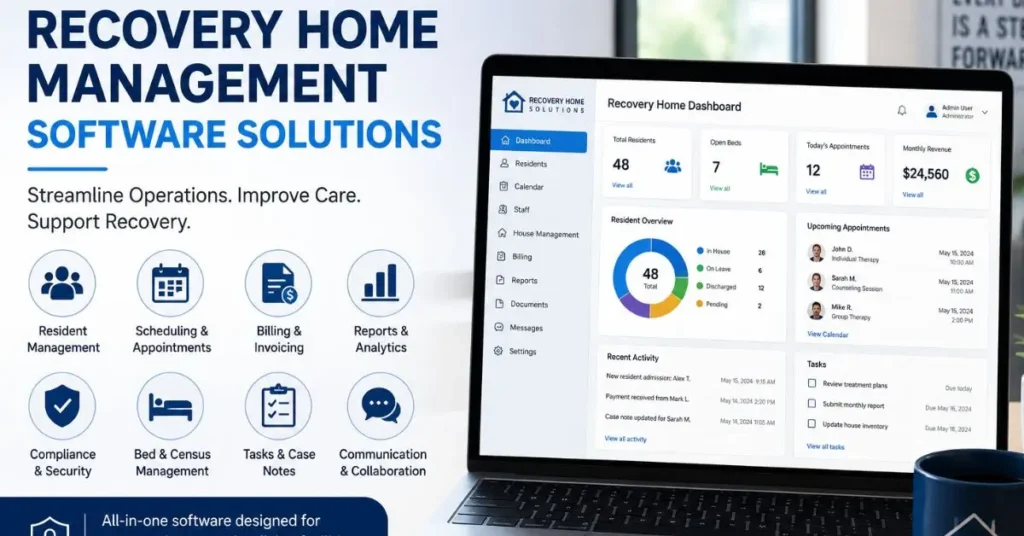
For example, a recovery home in Texas with 35 residents may use one dashboard to monitor occupancy, assign rooms, collect payments, and review staff schedules without switching between several applications.
Key Features to Look For
Not every platform offers the same capabilities. Understanding the most important features helps organizations select software that fits their workflow.
Resident Management
Resident profiles usually include:
- Personal information
- Admission dates
- Emergency contacts
- Program participation
- Case notes
- Progress tracking
Having all information in one secure location improves organization.
Scheduling Tools
Scheduling features help administrators manage:
- Staff shifts
- Group meetings
- Therapy sessions
- House activities
- Appointments
Automated reminders also reduce missed meetings.
Document Storage
Recovery homes generate many important documents.
Software often stores:
- Consent forms
- Intake paperwork
- Incident reports
- Policies
- Digital signatures
Cloud storage makes documents easier to find while reducing paper records.
Billing and Payment Tracking
Financial management is another important feature.
Many platforms include:
- Resident billing
- Payment history
- Invoices
- Balance tracking
- Financial reports
This helps administrators reduce manual accounting work.
Reporting and Analytics
Managers often need reports for internal reviews and compliance.
Common reports include:
- Occupancy
- Resident progress
- Revenue
- Staff activity
- Attendance
- Incident summaries
These reports help leaders make informed decisions.
Secure Communication
Many systems include secure messaging between:
- Staff
- Case managers
- Administrators
- Residents
Keeping communication within one platform improves coordination while protecting sensitive information.
Benefits of Recovery Home Management Software
Organizations adopt digital management systems for several reasons.
Better Organization
Instead of searching through paper files, staff can locate resident information within seconds.
This saves valuable time during daily operations.
Improved Accuracy
Manual data entry often leads to mistakes.
Software reduces duplicate records and helps maintain consistent documentation.
Increased Productivity
Automating repetitive tasks allows staff to spend more time supporting residents instead of completing paperwork.
Better Compliance
Many recovery homes must maintain accurate records for audits, licensing, or funding requirements.
Management software makes documentation easier to organize.
Stronger Team Communication
Shared dashboards help staff stay informed about resident updates, appointments, and important announcements.
Everyone works with the same information, reducing misunderstandings.
Helpful Comparison Table
| Manual Management | Management Software |
|---|---|
| Paper records | Digital resident files |
| Multiple spreadsheets | Centralized dashboard |
| Manual scheduling | Automated calendars |
| Phone calls and emails | Secure internal messaging |
| Time-consuming reporting | Instant reports |
| Higher risk of errors | Improved accuracy |
Who Can Benefit?
These platforms are useful for many organizations, including:
- Recovery homes
- Sober living homes
- Transitional housing programs
- Behavioral health facilities
- Addiction recovery centers
- Residential treatment programs
Each organization can customize workflows based on its size and operational needs.
Cloud-Based vs. On-Premise Software
Many providers now offer cloud-based systems.
Cloud software provides:
- Automatic updates
- Remote access
- Easier backups
- Lower hardware costs
- Better collaboration
Some larger organizations may still choose on-premise systems for greater control over their IT infrastructure, although these often require higher maintenance.
FAQs
What are recovery home management software solutions?
They are software platforms that help recovery homes manage residents, scheduling, billing, compliance, and daily operations from one centralized system.
Who should use this software?
Recovery homes, sober living facilities, addiction treatment centers, and behavioral health organizations can use it to improve efficiency and resident care.
What features are most important?
Look for resident management, scheduling, billing, reporting, compliance tracking, secure data storage, and user-friendly dashboards.
Is cloud-based software secure?
Yes, reputable providers use encryption, backups, and access controls to protect sensitive information and support healthcare data security.
Can small recovery homes benefit?
Absolutely. Many platforms offer scalable plans that help small facilities reduce paperwork, stay organized, and improve daily workflows.
Conclusion
The right recovery home management software solutions can simplify operations, improve compliance, and help staff focus more on resident care. Compare features, security, scalability, and ease of use before choosing a platform. A well-designed solution supports both efficient management and better recovery outcomes for residents.