

Introduction:
difference umrah and hajj Many Muslims around the world dream of visiting Makkah at least once in their lifetime. Some plan for Umrah first because it is easier and more flexible, while others prepare for the larger journey of Hajj. For beginners, the two pilgrimages can seem very similar, especially since both involve the Kaaba and important Islamic rituals.
Understanding the difference umrah and hajj matters because each pilgrimage has different rules, timing, obligations, and spiritual significance. Knowing these differences helps Muslims prepare properly, avoid confusion, and appreciate the purpose behind each journey.
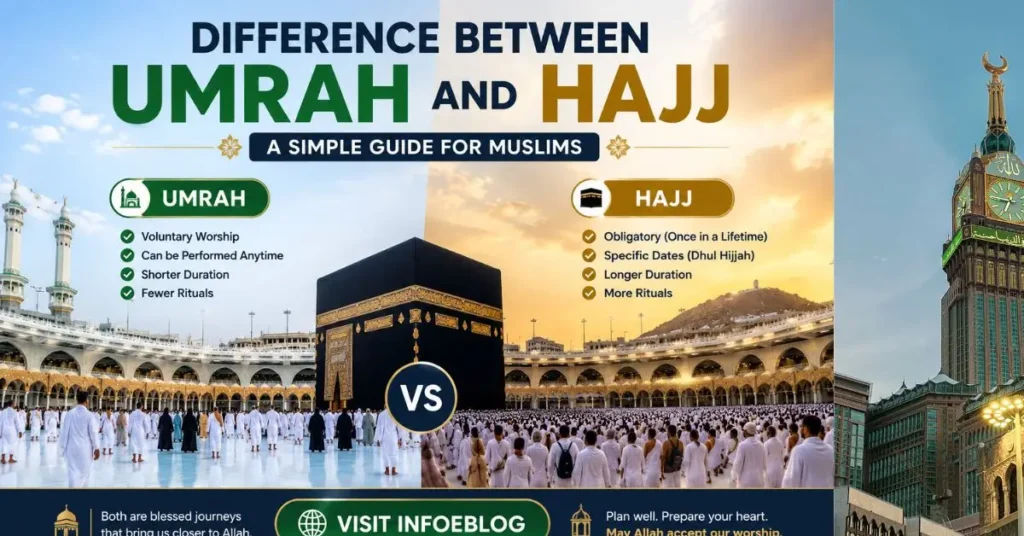
In simple terms, Hajj is a mandatory Islamic pilgrimage for financially and physically able Muslims once in a lifetime during specific Islamic dates, while Umrah is a voluntary pilgrimage that can be performed almost any time of the year. Both involve acts of worship in Makkah but differ in rituals, importance, and timing.
This guide explains the major differences clearly, including rituals, costs, spiritual value, and practical travel considerations for Muslims living in the US, UK, and Canada.
TL;DR
- Hajj is mandatory once for eligible Muslims
- Umrah is voluntary but highly rewarding
- Hajj takes place during specific Islamic dates
- Umrah can be performed almost anytime
- Hajj includes more rituals than Umrah
- Hajj usually costs more and takes longer
- Both pilgrimages focus on worship, repentance, and closeness to Allah
What Is Hajj?
Hajj is one of the Five Pillars of Islam. Every Muslim who is physically and financially capable must perform it at least once in their lifetime.
The pilgrimage takes place in the Islamic month of Dhul Hijjah, specifically between the 8th and 13th days. Millions of Muslims gather in Makkah each year to complete a series of sacred rituals.
Hajj is not only a physical journey. It is also deeply spiritual. Muslims seek forgiveness, purification, and stronger faith during the pilgrimage.
What Is Umrah?
Umrah is often called the “minor pilgrimage.” Unlike Hajj, it is not compulsory, but it carries great spiritual reward.
Muslims can perform Umrah almost any time during the year. The rituals are simpler and shorter compared to Hajj.
Many people choose Umrah because it is easier to plan financially and physically. Families from countries like the United States or Canada often perform Umrah during school vacations or Ramadan.
Main Difference Umrah and Hajj
The biggest difference between the two pilgrimages is obligation and timing.
Hajj is compulsory for eligible Muslims and must be performed during specific Islamic dates. Umrah is voluntary and flexible throughout most of the year.
Another important difference is the number of rituals involved. Hajj includes additional acts of worship such as staying in Mina, standing at Arafat, and spending time in Muzdalifah.
Umrah mainly focuses on Ihram, Tawaf, Sa’i, and hair trimming or shaving.
Comparison Table
| Feature | Hajj | Umrah |
|---|---|---|
| Religious Status | Mandatory once if able | Voluntary |
| Time | Dhul Hijjah only | Most of the year |
| Duration | Several days | A few hours to 1 day |
| Number of Rituals | More detailed rituals | Simpler rituals |
| Cost | Usually more expensive | Usually more affordable |
| Crowd Size | Extremely large | Smaller compared to the Hajj |
| Spiritual Reward | Major obligation fulfilled | Highly rewarding worship |
Why Hajj Is More Important
Hajj holds a unique position in Islam because Allah made it obligatory for Muslims who are able to perform it.
Completing Hajj fulfills one of Islam’s core pillars. Many Muslims spend years saving money and preparing spiritually for this once-in-a-lifetime experience.
The Day of Arafat during Hajj is especially significant. Pilgrims gather in worship and prayer, seeking Allah’s mercy and forgiveness.
The emotional and spiritual impact of Hajj often changes people deeply. Many pilgrims describe it as one of the most meaningful experiences of their lives.
Why Umrah Is Still Special
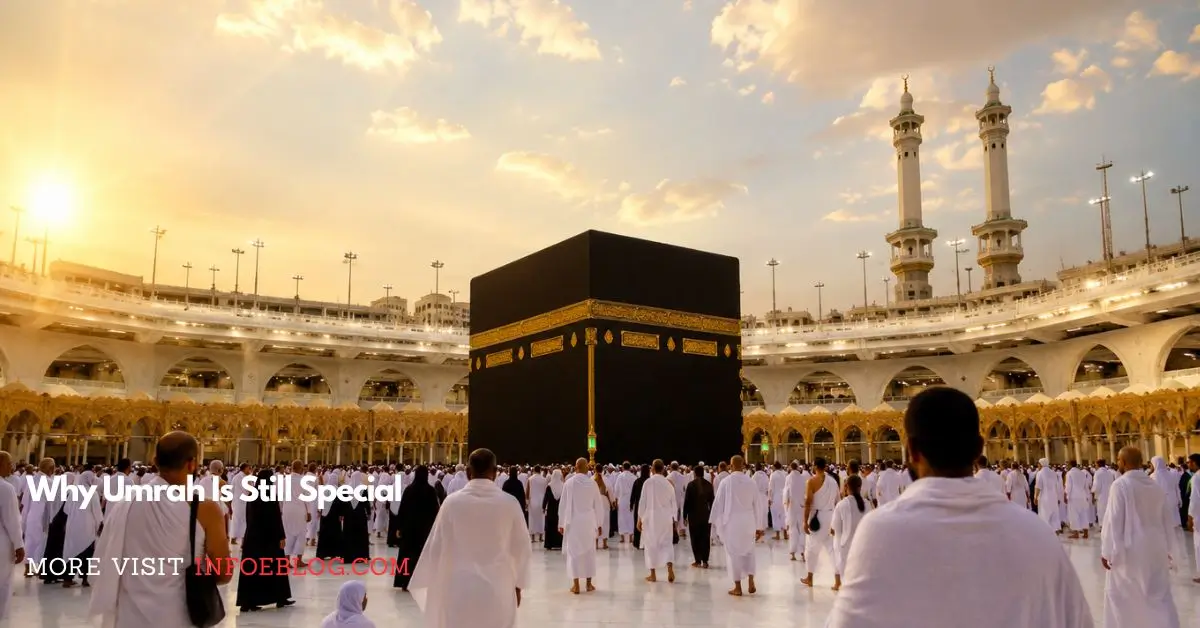
Even though Umrah is not mandatory, it remains highly respected and spiritually valuable.
Many Muslims perform Umrah to strengthen their faith, seek forgiveness, or reconnect spiritually during difficult times in life.
Ramadan Umrah is especially popular because worship during Ramadan carries additional blessings.
For people unable to perform Hajj immediately due to finances, health, or visa limits, Umrah can still provide a meaningful spiritual journey.
Rituals of Umrah
The rituals of Umrah are shorter and easier to understand.
1. Ihram
Pilgrims enter a state of purity called Ihram and wear special clothing. Men wear two white cloths, while women dress modestly.
2. Tawaf
Pilgrims walk around the Kaaba seven times in worship and prayer.
3. Sa’i
Pilgrims walk between Safa and Marwah seven times, remembering the struggle of Hajar (AS).
4. Hair Trimming or Shaving
Men usually shave or trim their hair, while women trim a small portion.
After this, the Umrah is complete.
Rituals of Hajj
Hajj includes Umrah-like rituals plus several additional acts performed over multiple days.
Main Hajj Rituals Include
- Entering Ihram
- Tawaf around the Kaaba
- Sa’i between Safa and Marwah
- Staying in Mina
- Standing at Arafat
- Spending the night in Muzdalifah
- Stoning the pillars at Jamarat
- Animal sacrifice
- Final Tawaf
Because of these extra rituals, Hajj requires more physical preparation and planning.
Cost Difference Between Umrah and Hajj
Another major difference between umrah and hajj involves cost.
Hajj packages from the US, UK, or Canada are usually much more expensive because of travel demand, accommodation, transportation, and limited seasonal availability.
Umrah is generally more affordable and flexible.
Example
A family from New York may spend significantly more on Hajj due to limited packages during Dhul Hijjah, while Umrah offers wider pricing options during off-peak months.
Prices change yearly depending on airline costs, hotel demand, and Saudi travel regulations.
Physical Demands of Both Pilgrimages
Hajj is physically more demanding because pilgrims walk long distances and complete rituals over several days in crowded conditions.
Older adults often prepare months in advance through walking and improving physical stamina.
Umrah is shorter and easier physically, although the crowds near the Kaaba can still be challenging during busy seasons like Ramadan.
Spiritual Lessons From Hajj and Umrah
Both pilgrimages teach humility, patience, equality, and devotion to Allah.
Pilgrims wear simple clothing regardless of wealth or social status. This reminds Muslims that all people are equal before Allah.
The journeys also encourage gratitude and self-reflection. Many Muslims return feeling spiritually renewed and more focused on faith and good character.
Can You Perform Umrah During Hajj?
Yes, many pilgrims perform Umrah as part of certain Hajj types, especially Hajj Tamattu.
In this form of pilgrimage, pilgrims complete Umrah first, leave Ihram temporarily, and later re-enter Ihram for Hajj rituals.
This is common among international pilgrims traveling from countries like the United States and Canada.
Which Pilgrimage Should You Do First?
For many Muslims, Umrah comes first because it is easier to arrange and helps them become familiar with Makkah and the pilgrimage experience.
Umrah can also help people prepare emotionally and spiritually before performing Hajj later.
However, if someone is financially and physically capable of Hajj, fulfilling the obligation should remain the priority.
Common Misunderstandings
“Umrah Can Replace Hajj”
This is incorrect. Umrah does not replace the obligation of Hajj for eligible Muslims.
“Hajj and Umrah Are Exactly the Same”
Both involve worship in Makkah, but Hajj contains additional rituals and strict timing requirements.
“Only Older Muslims Perform Hajj”
Many younger Muslims now perform Hajj and Umrah, especially families and professionals planning earlier in life.
Travel Tips for Pilgrims From the US, UK, and Canada
International pilgrims often benefit from planning early.
Helpful Tips
- Apply for visas early
- Choose trusted travel agencies
- Prepare physically before travel
- Learn basic pilgrimage rituals beforehand
- Carry comfortable walking shoes
- Stay hydrated in warm weather
Good preparation makes the journey smoother and less stressful.
Importance of Intention in Pilgrimage
In Islam, intention matters greatly.
Both Hajj and Umrah should be performed sincerely for Allah rather than for status, social media, or public attention.
A sincere pilgrimage focuses on worship, repentance, prayer, and personal spiritual growth.
Frequently Asked Questions
What is the main difference between Hajj and Umrah?
Hajj is a mandatory pilgrimage performed during specific Islamic dates, while Umrah is voluntary and can be performed most of the year. Hajj also includes more rituals and takes longer to complete.
Both pilgrimages are spiritually important, but Hajj fulfills one of Islam’s Five Pillars for eligible Muslims.
Is Umrah easier than Hajj?
Yes, Umrah is generally easier because it involves fewer rituals and takes less time. Many pilgrims complete Umrah within a few hours or a single day.
Hajj requires several days of worship, travel between holy sites, and greater physical endurance due to larger crowds and additional rituals.
Can children perform Hajj or Umrah?
Yes, children can perform both pilgrimages with their families. However, Hajj only becomes obligatory after a Muslim reaches adulthood and meets financial and physical conditions.
Many families bring children for spiritual learning and family experiences during Umrah trips.
Is Umrah accepted during Ramadan?
Yes, Umrah during Ramadan is highly respected and spiritually rewarding. Many Muslims prefer this time because worship in Ramadan carries special blessings.
However, Ramadan crowds can be very large, especially near the Kaaba, so travel planning becomes more important.
Do women need a mahram for Umrah or Hajj?
Travel rules for women can vary depending on Saudi regulations and local travel policies. Some organized group options may allow women to travel without a mahram under certain conditions.
Pilgrims should always check updated Saudi travel requirements before booking.
Final Thoughts
Understanding the difference between umrah and hajj helps Muslims prepare for one of the most meaningful spiritual journeys in Islam.
Hajj fulfills a major religious obligation, while Umrah offers flexible opportunities for worship and spiritual renewal throughout the year. Both pilgrimages strengthen faith, encourage humility, and bring Muslims closer to Allah.
For many believers, the journey to Makkah becomes a life-changing experience filled with reflection, gratitude, and hope for forgiveness.
Suggestions
- “Complete Beginner’s Guide to Umrah”
- “How to Prepare Spiritually for Hajj”