
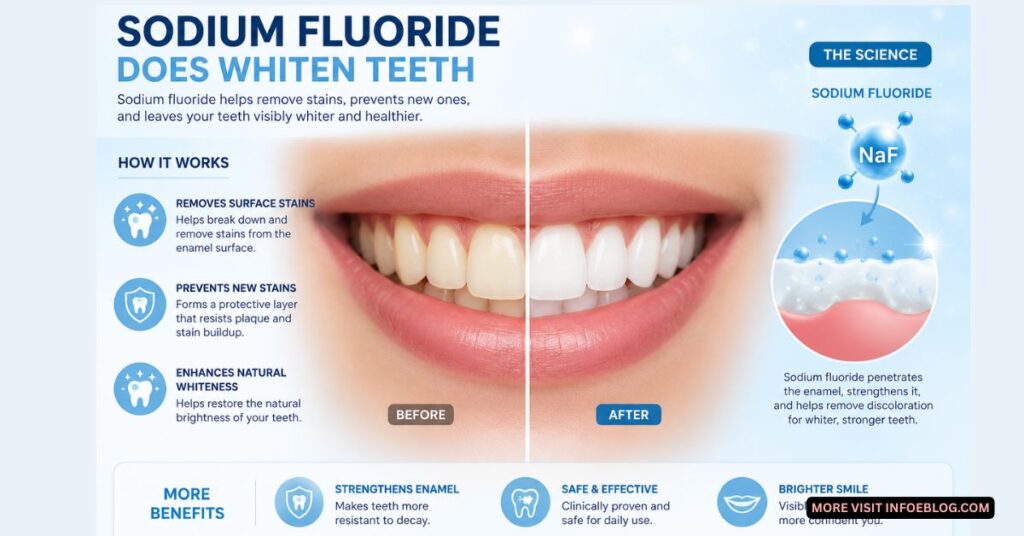

Many people buy toothpaste hoping it will give them a brighter smile. One ingredient that often appears on the label is sodium fluoride. That leads to a common question: does sodium fluoride whiten teeth, or is it only there to protect against cavities?
The answer is more nuanced than most toothpaste ads suggest. Sodium fluoride can help teeth appear cleaner and healthier, but it is not technically a bleaching ingredient. Understanding the difference matters because it helps you choose products that actually match your goals.
In this article, you will learn what sodium fluoride does, how whitening toothpaste works, whether fluoride can remove stains, and what realistic results you should expect.
What Is Sodium Fluoride?
Sodium fluoride is a mineral compound commonly added to toothpaste and mouth rinses to strengthen tooth enamel and help prevent cavities.
It works by rebuilding weakened enamel, reducing acid damage, and making teeth more resistant to decay. While it supports overall dental health, it does not chemically bleach teeth the way peroxide-based whitening products do. However, healthier enamel can sometimes make teeth appear smoother, cleaner, and slightly brighter.
TL;DR
- Sodium fluoride mainly protects enamel and prevents cavities
- It does not bleach teeth like hydrogen peroxide
- Some fluoride toothpaste can help remove surface stains
- Healthier enamel may make teeth look brighter over time
- Whitening results depend on the product’s full formula, not fluoride alone
Why People Think Fluoride Whitens Teeth
Many whitening toothpastes contain sodium fluoride. Because of this, people often assume fluoride itself is the whitening ingredient.
In reality, most whitening effects come from other ingredients such as:
- Mild abrasives
- Hydrogen peroxide
- Carbamide peroxide
- Baking soda
- Silica polishing agents
Fluoride is usually included because whitening products can sometimes increase tooth sensitivity. Sodium fluoride helps protect enamel and reduce that risk.
So when a toothpaste claims to whiten teeth, the whitening effect usually comes from stain-removing or bleaching ingredients, while fluoride supports tooth health in the background.
How Teeth Become Stained
To understand whether fluoride can help, it is important to know why teeth lose brightness in the first place.
Surface Stains
These stains develop on the outer enamel layer. Common causes include:
- Coffee
- Tea
- Red wine
- Smoking
- Dark sodas
Surface stains are easier to remove with whitening toothpaste.
Deep Stains
These happen below the enamel and may come from:
- Aging
- Certain medications
- Trauma
- Excess fluoride during childhood
- Genetics
Deep stains usually need professional whitening treatments.
How Whitening Toothpaste Actually Works
Most whitening toothpaste works by polishing away surface stains rather than changing the natural color of teeth.
Common stain-removing ingredients include:
| Ingredient | Main Purpose |
|---|---|
| Hydrated silica | Polishes surface stains |
| Baking soda | Removes plaque and discoloration |
| Hydrogen peroxide | Bleaches stains |
| Carbamide peroxide | Whitening agent |
| Sodium fluoride | Strengthens enamel |
This table shows an important point: sodium fluoride plays a supportive role, not the primary whitening role.
Can Sodium Fluoride Make Teeth Look Whiter?
The short answer is yes, but indirectly.
Healthy enamel reflects light more evenly. When fluoride strengthens enamel and reduces decay, teeth can appear smoother and cleaner. That may create a brighter appearance over time.
However, this is not the same as actual whitening or bleaching.
A good example is someone who switches from poor dental care to regular brushing with fluoride toothpaste. After a few weeks, their teeth may look fresher because plaque buildup decreases and enamel becomes healthier. But the fluoride itself did not bleach the teeth white.
The Difference Between Whitening and Brightening
Many people use these terms interchangeably, but they are different.
Whitening
This means changing the tooth color through bleaching agents like peroxide.
Brightening
This means improving the appearance of teeth by:
- Removing surface stains
- Reducing plaque
- Smoothing enamel
- Improving oral hygiene
Sodium fluoride mainly supports brightening, not true whitening.
Does Fluoride Toothpaste Remove Yellow Teeth?
It depends on why the teeth look yellow.
If the Yellowing Comes From Surface Stains
Fluoride toothpaste with polishing ingredients may help improve appearance.
If the Yellowing Comes From Thin Enamel
Fluoride may help protect remaining enamel, but it cannot fully reverse the color change.
If the Yellowing Is Deep Inside the Tooth
Professional whitening treatments are usually needed.
This distinction matters because many people expect dramatic whitening from regular toothpaste, which is often unrealistic.
What Dentists Say About Fluoride and Whitening
Dentists generally recommend fluoride toothpaste because it protects oral health. The American Dental Association supports fluoride use for cavity prevention and enamel protection.
However, dental professionals also clarify that fluoride is not a bleaching ingredient.
Most dentists recommend focusing on:
- Consistent brushing
- Daily flossing
- Regular cleanings
- Limiting stain-causing drinks
- Using whitening products carefully
For people with sensitive teeth, fluoride-containing toothpaste may actually help them tolerate whitening products better.
Is Whitening Toothpaste With Sodium Fluoride Safe?
For most adults, yes.
Using fluoride toothpaste as directed is considered safe and effective for daily use. In fact, many dentists prefer whitening products that also contain fluoride because they reduce enamel damage risk.
Still, there are some limits.
Possible Downsides
- Overbrushing can wear enamel
- Highly abrasive toothpaste may increase sensitivity
- Excess fluoride intake during childhood can cause fluorosis
For adults using normal amounts of toothpaste, fluoride exposure from brushing is generally not a concern.
The Role of Enamel in a White Smile
One reason this topic causes confusion is that enamel health strongly affects tooth appearance.
Enamel is the outer protective layer of teeth. When enamel becomes weak or thin:
- Teeth may look dull
- Yellow dentin underneath becomes more visible
- Surface texture becomes uneven
Fluoride helps remineralize enamel. That does not bleach teeth, but it can improve how light reflects off the tooth surface.
Think of it like cleaning and polishing a window. The glass itself may not change color, but it looks clearer and brighter afterward.
What Ingredients Actually Whiten Teeth?
If your main goal is visible whitening, look for products containing:
Hydrogen Peroxide
One of the most effective whitening agents. It penetrates enamel and breaks down stains.
Carbamide Peroxide
Common in whitening strips and dental gels. Works similarly to hydrogen peroxide.
Baking Soda
Helps remove surface stains gently.
Activated Charcoal
Popular online, though evidence is mixed and some products may be too abrasive.
Blue Covarine
Creates an optical illusion that makes teeth appear whiter temporarily.
When reading labels, remember that sodium fluoride is mainly there for protection and enamel support.
Professional Whitening vs Whitening Toothpaste
Many people expect toothpaste to deliver results similar to professional whitening, but that is unlikely.
Whitening Toothpaste
- Best for mild surface stains
- Gradual results
- Lower cost
- Safer for regular use
Professional Whitening
- Stronger bleaching agents
- Faster results
- Better for deep stains
- More expensive
For example, a coffee drinker with light staining may notice improvement from a whitening toothpaste in a few weeks. But someone with deep discoloration from aging may need professional treatment for visible results.
Can Fluoride Prevent Future Stains?
Indirectly, yes.
Strong enamel is more resistant to damage and roughness that can trap stains. Fluoride also helps reduce plaque buildup when combined with good oral hygiene.
That means fluoride may help maintain a cleaner appearance over time, especially when paired with:
- Regular dental cleanings
- Reduced smoking
- Less coffee and soda
- Better brushing habits
Best Habits for Whiter Teeth
If you want brighter teeth, daily habits matter more than any single ingredient.
Brush Twice Daily
Use a fluoride toothpaste approved by dental professionals.
Limit Dark Drinks
Coffee, tea, cola, and red wine commonly stain enamel.
Drink Water After Meals
This helps rinse away stain-causing particles.
Avoid Smoking
Tobacco stains are difficult to remove.
Get Regular Dental Cleanings
Professional cleanings remove tartar and stubborn surface stains.
Use Whitening Products Carefully
Overusing whitening strips or abrasive toothpaste can increase sensitivity.
Does Sodium Fluoride Whiten Teeth Better Than Stannous Fluoride?
Both ingredients protect teeth, but they work slightly differently.
Sodium Fluoride
- Common in standard toothpaste
- Focuses on cavity prevention
- Supports enamel remineralization
Stannous Fluoride
- Helps with sensitivity
- Fights bacteria
- May reduce gum problems
Neither ingredient is a true whitening agent. Whitening results still depend mostly on polishing or bleaching ingredients included in the formula.
Common Myths About Fluoride Toothpaste
Myth 1: Fluoride Bleaches Teeth
False. Fluoride strengthens enamel but does not bleach tooth color.
Myth 2: Whitening Toothpaste Changes Tooth Color Dramatically
Usually false. Most products mainly remove surface stains.
Myth 3: Stronger Scrubbing Means Whiter Teeth
False. Aggressive brushing can damage enamel and worsen appearance over time.
Myth 4: All Yellow Teeth Are Dirty
False. Natural tooth color varies between people and often becomes warmer with age.
FAQs
Does sodium fluoride whiten teeth permanently?
Not directly. Sodium fluoride supports enamel health and may help teeth appear brighter, but it does not permanently bleach tooth color. Any improvement usually comes from cleaner enamel and reduced surface buildup rather than a true color change.
Professional whitening treatments are generally needed for long-lasting whitening results.
Can fluoride toothpaste remove coffee stains?
Yes, some fluoride toothpaste can help remove mild coffee stains from the tooth surface. The stain removal usually comes from polishing ingredients rather than the fluoride itself.
Regular brushing combined with professional dental cleanings works best for stubborn stains.
Is sodium fluoride safe for daily use?
Yes. Sodium fluoride is widely used in toothpaste and is considered safe when used as directed. Dentists recommend it because it helps strengthen enamel and reduce cavities.
Children should still use age-appropriate amounts of toothpaste to avoid swallowing too much fluoride.
Why do my teeth still look yellow after using whitening toothpaste?
Whitening toothpaste mainly targets surface stains. If discoloration comes from aging, thin enamel, genetics, or deep internal stains, toothpaste alone may not create dramatic changes.
A dentist can help identify the cause and recommend stronger whitening options if needed.
What toothpaste ingredients actually whiten teeth?
Hydrogen peroxide and carbamide peroxide are the main bleaching ingredients that truly whiten teeth. Mild abrasives like silica and baking soda also help remove stains.
Fluoride supports enamel protection but is not the primary whitening ingredient.
Is whitening toothpaste bad for enamel?
Most reputable whitening toothpaste products are safe when used correctly. However, overly abrasive formulas or aggressive brushing can wear down enamel over time.
Choosing products with fluoride may help reduce sensitivity and support enamel protection.
- “how to remove coffee stains from teeth naturally”
- “best daily habits for stronger enamel”
- American Dental Association
- Cleveland Clinic Dental Health Resources
Final Thoughts
Healthy teeth often look brighter, and fluoride plays an important role in keeping enamel strong. But sodium fluoride is not a true whitening ingredient. Its main job is protection, not bleaching.
If your goal is a healthier smile with fewer cavities, fluoride toothpaste is an excellent choice. If you want dramatic whitening, you may need products with peroxide or professional dental treatments.
The best long-term results usually come from combining good oral hygiene, regular dental visits, and realistic expectations.