

Introduction:
what is route accounting software Running a delivery business sounds simple at first. A company loads products into trucks, drivers deliver them, and customers pay for the goods. But once daily deliveries increase, things become complicated very quickly.
Invoices get lost. Inventory numbers stop matching. Drivers take inefficient routes. Payments are delayed. Customer records become difficult to manage. This is where route accounting software becomes extremely useful.
Businesses that handle deliveries every day often rely on digital systems to organize routes, inventory, billing, payments, and customer information in one place. Without proper software, operations can become slow, expensive, and difficult to scale.
In this guide, you will learn exactly how this software works, who uses it, its key features, advantages, limitations, and what businesses should consider before choosing a system.
Clear Definition
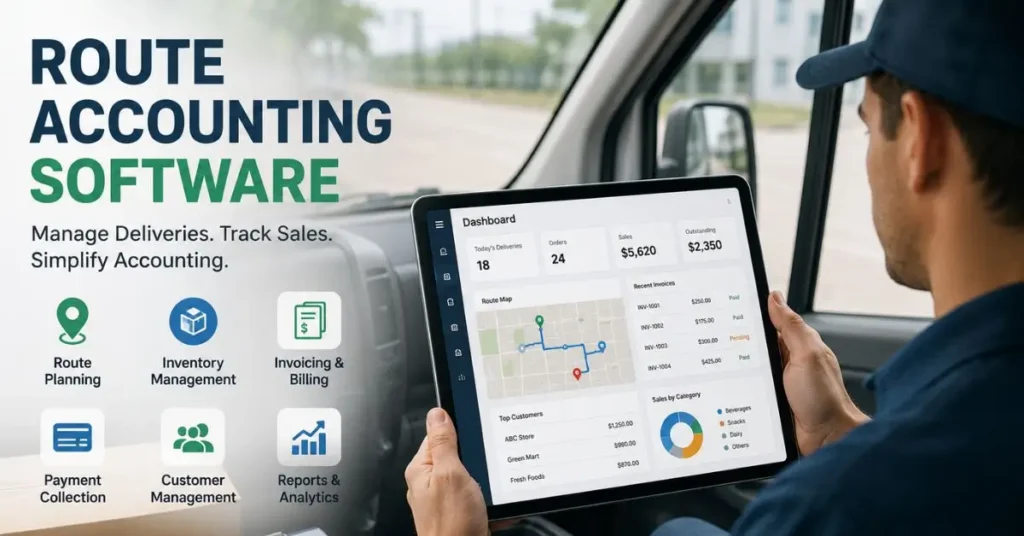
Route accounting software is a business management system designed for companies that sell and deliver products on scheduled routes. It helps businesses manage deliveries, invoices, inventory, customer accounts, payments, and driver activities from a single platform. It is commonly used by food distributors, beverage companies, laundry services, fuel suppliers, and other route-based businesses.
TL;DR
- Route-based businesses use this software to manage deliveries and accounting together
- It tracks inventory, invoices, customer payments, and delivery routes
- Common users include beverage, food, fuel, and wholesale delivery companies
- It improves efficiency, reduces paperwork, and helps businesses scale operations
- Modern systems often include GPS tracking, mobile apps, and cloud access
Why Businesses Need Route Accounting Systems
Many growing delivery companies start with spreadsheets, paper invoices, and manual scheduling. That may work for a small operation, but problems appear once deliveries increase.
For example, imagine a beverage distribution company in Texas handling 150 daily deliveries. Drivers collect payments, return unsold products, and update inventory throughout the day. Managing all of that manually would take hours and create a high risk of mistakes.
A route accounting platform simplifies these tasks by automating much of the process.
Businesses mainly use these systems to:
- Track deliveries in real time
- Create invoices instantly
- Monitor truck inventory
- Record customer payments
- Improve delivery efficiency
- Reduce accounting errors
- Manage recurring delivery routes
This combination of logistics and accounting is what makes the software different from standard accounting tools.
How Route Accounting Software Works
The system connects several business operations into one workflow. Instead of managing accounting, delivery tracking, inventory, and customer management separately, everything works together.
Here is a simple breakdown of how the process usually works.
| Process | What the Software Does |
|---|---|
| Route Planning | Creates optimized delivery schedules |
| Inventory Tracking | Monitors products loaded onto trucks |
| Invoice Generation | Produces invoices during deliveries |
| Payment Collection | Records cash, card, or digital payments |
| Customer Management | Stores account history and delivery preferences |
| Reporting | Generates sales and operational reports |
A delivery manager can assign routes to drivers, monitor deliveries live, and review completed transactions from a dashboard.
Drivers often use mobile apps connected to the system. They can scan products, collect signatures, issue invoices, and process payments directly from a tablet or smartphone.
Industries That Use Route Accounting Software
This type of software is popular in industries that depend on recurring deliveries.
Beverage Distribution
Soft drink and bottled water companies frequently use these systems to manage recurring customer deliveries.
Food Distribution
Food suppliers delivering to restaurants or grocery stores need accurate inventory and invoicing tools.
Fuel and Oil Delivery
Fuel distributors use route management systems to schedule deliveries efficiently and track customer accounts.
Laundry and Linen Services
Commercial laundry businesses often manage pickup and delivery routes through specialized accounting platforms.
Wholesale Distribution
Wholesalers delivering products directly to stores benefit from route planning and inventory visibility.
Main Features Businesses Look For
Not every platform offers the same tools, but most modern systems include several core features.
Route Optimization
The software helps businesses reduce fuel costs and delivery times by finding more efficient routes.
For example, instead of drivers choosing routes manually, the system can automatically calculate the fastest order sequence.
Inventory Management
Businesses can track inventory loaded onto each vehicle and monitor returned items after deliveries.
This helps reduce stock shortages and product loss.
Mobile Driver Apps
Drivers can access customer information, delivery schedules, and invoices directly from mobile devices.
Many systems also allow electronic signatures and photo proof of delivery.
Billing and Invoicing
Invoices are created automatically during deliveries, reducing paperwork and manual data entry.
Payment Processing
Drivers can collect digital payments on-site, which speeds up cash flow and improves customer convenience.
Reporting and Analytics
Managers can review sales performance, delivery efficiency, customer activity, and inventory trends.
Benefits of Using Route Accounting Software
Businesses invest in these systems because they solve operational problems that affect growth and profitability.
Better Delivery Efficiency
Optimized routes save fuel, reduce driving time, and improve scheduling.
Even small route improvements can reduce operating costs significantly over time.
Fewer Accounting Errors
Manual invoicing often leads to missing payments or incorrect records.
Automation improves accuracy and reduces administrative work.
Faster Customer Service
Drivers can access customer records instantly instead of relying on paper files or office calls.
Improved Inventory Control
Businesses gain better visibility into product movement, helping prevent shortages and overstocking.
Easier Business Scaling
As delivery volume grows, software helps businesses manage operations without dramatically increasing staff.
Potential Drawbacks to Consider
Although route accounting systems provide major advantages, they are not perfect for every business.
Initial Setup Can Take Time
Companies may need weeks or months to fully implement a new system.
Training employees is also important.
Software Costs
Advanced platforms can be expensive, especially for smaller businesses with limited delivery operations.
Learning Curve
Drivers and office staff may need time to adapt to new workflows and mobile applications.
Customization Limitations
Some businesses require specialized workflows that standard software may not fully support.
Cloud-Based vs On-Premise Systems
Modern route accounting solutions are usually cloud-based, but some companies still prefer on-premise systems.
Cloud-Based Software
Cloud systems are hosted online and accessed through the internet.
Benefits include:
- Remote access
- Automatic updates
- Lower upfront costs
- Easier scalability
On-Premise Software
These systems run on company-owned servers.
Benefits include:
- Greater control over data
- Custom configuration options
- Internal security management
However, maintenance costs are usually higher.
Real-World Example
Imagine a dairy delivery company operating in Chicago.
Before implementing route accounting software, drivers used paper invoices and manually reported deliveries at the end of the day. Inventory mistakes were common, and office staff spent hours reconciling payments.
After switching to a digital system:
- Drivers used tablets for invoices
- Payments processed instantly
- Delivery routes improved
- Inventory tracking became more accurate
- Customer complaints decreased
The company reduced administrative workload and improved delivery speed within months.
This example shows why many delivery businesses eventually move toward automated route systems.
Important Features to Compare Before Choosing Software
Businesses should compare platforms carefully before making a decision.
Ease of Use
Complicated software can slow adoption and frustrate employees.
Mobile Compatibility
Driver apps should work smoothly on smartphones and tablets.
Integration Options
The platform should connect with accounting tools, ERP systems, or inventory software if needed.
Customer Support
Reliable support matters because delivery operations depend on software uptime.
Reporting Tools
Strong analytics help businesses identify operational problems quickly.
Is Route Accounting Software Worth It?
For businesses handling recurring deliveries, the answer is often yes.
Companies managing multiple drivers, inventory movement, customer billing, and daily routes usually benefit from automation. The time savings and reduction in errors can justify the investment over time.
However, very small businesses with limited deliveries may not need advanced systems immediately.
The value depends on delivery volume, operational complexity, and growth goals.
Frequently Asked Questions
What is route accounting software used for?
Route accounting software is used to manage delivery routes, inventory, invoicing, customer accounts, and payments within one system. It helps businesses streamline daily delivery operations and improve efficiency.
Many distribution companies use it to reduce paperwork, improve delivery accuracy, and monitor business performance in real time.
Which businesses benefit most from route accounting systems?
Businesses with recurring deliveries benefit the most from these platforms. Common examples include beverage distributors, food suppliers, fuel delivery companies, and laundry services.
Any company managing multiple drivers, inventory movement, and customer billing can gain operational advantages from automation.
Is route accounting software different from regular accounting software?
Yes. Standard accounting software mainly handles financial records, bookkeeping, and reporting. Route accounting systems combine accounting with delivery management, route planning, inventory tracking, and mobile driver tools.
This makes them more suitable for route-based operations.
Can small businesses use route accounting software?
Yes, but it depends on operational size and budget. Small businesses with growing delivery operations may benefit from entry-level systems.
However, companies with only a few deliveries per week may not need advanced features immediately.
Does route accounting software include GPS tracking?
Many modern platforms include GPS tracking and route optimization tools. These features help businesses monitor drivers, improve delivery efficiency, and reduce fuel costs.
GPS functionality may vary depending on the software provider and pricing plan.
How much does route accounting software cost?
Pricing varies based on features, number of users, and deployment type. Some cloud-based platforms charge monthly subscription fees, while enterprise systems may require custom pricing.
Costs often increase with advanced analytics, mobile tools, and integrations.
- “Best inventory management software for distributors”
- “How delivery management systems improve logistics”
- U.S. Small Business Administration
- Investopedia
Final Thoughts
Businesses that depend on deliveries need accurate systems to manage inventory, routes, invoices, and customer payments efficiently. The right software can reduce manual work, improve delivery performance, and support long-term business growth.
If you run a route-based business, understanding how these systems work is an important first step before investing in a solution that fits your operations.