

Introduction
Search engine optimization is changing fast because AI-powered search tools are becoming more common. Traditional SEO platforms still matter, but many marketers and website owners now want smarter ways to analyze search visibility, content quality, and user intent.
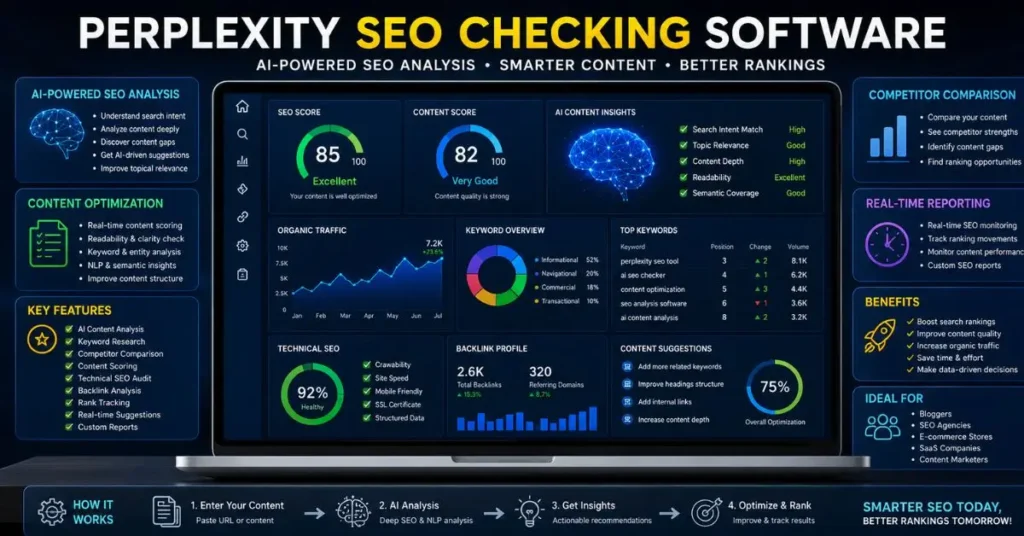
This is where perplexity seo checking software becomes useful. These tools help users review content performance, evaluate search relevance, and understand how AI-driven search systems may interpret webpages.
In simple terms, this type of software combines SEO analysis with artificial intelligence to help users improve content quality, search visibility, and topical relevance. Instead of focusing only on backlinks or keywords, it also looks at context, intent, and content usefulness.
In this guide, you will learn how these tools work, their benefits, possible limitations, and how businesses can use them in real SEO workflows.
summary
- AI-powered SEO tools focus on search intent and content quality
- They help analyze readability, relevance, and topical coverage
- Useful for bloggers, agencies, SaaS companies, and content teams
- Best used alongside traditional SEO platforms
- Human editing is still important for accuracy and trust
What Is Perplexity SEO Checking Software?

Perplexity seo checking software refers to AI-assisted SEO tools designed to analyze webpages, content structure, and search relevance using machine learning and natural language processing.
Unlike older optimization platforms that mainly track rankings and backlinks, these systems try to understand content the way modern AI search engines do.
For example, traditional SEO software may tell you:
- Your keyword density
- Number of backlinks
- Meta tag issues
- Page speed problems
An AI-driven optimization platform may also evaluate:
- Search intent alignment
- Topic depth
- Readability quality
- Semantic relevance
- Missing contextual information
- User-focused answers
This makes the software more useful for modern content strategies where quality matters more than keyword repetition.
Why AI SEO Tools Are Becoming Popular
Search behavior has changed. People now ask complete questions instead of typing short keywords.
For example:
Old search style:
“best CRM software”
Modern search style:
“What is the best CRM software for small real estate businesses?”
AI search systems understand full questions better than older search models. Because of this, SEO professionals now need content that answers real user intent clearly.
AI-based optimization platforms help by identifying:
- Missing subtopics
- Weak explanations
- Thin content sections
- Over-optimized keyword usage
- Poor readability
- Incomplete answers
This helps writers create more useful content instead of simply repeating keywords.
How These SEO Analysis Tools Work
Most AI-powered SEO platforms use several systems together.
Natural Language Processing
Natural language processing helps software understand meaning, relationships, and context inside content.
For example, if an article discusses “running shoes,” the tool may expect related terms like:
- cushioning
- arch support
- marathon training
- stability shoes
- athletic footwear
This helps identify topical completeness naturally.
Search Intent Evaluation
Modern SEO software checks whether content matches informational, transactional, or navigational intent.
A product page should not read like a blog article. Similarly, an educational guide should not feel overly promotional.
Intent alignment improves user satisfaction and can support stronger rankings.
Competitor Content Comparison
Many tools compare your content with competing pages ranking for similar queries.
They may analyze:
- Content length
- Heading structure
- Entity coverage
- Question relevance
- Topic depth
- Readability
This gives content creators practical improvement suggestions.
Content Scoring
Some platforms provide optimization scores based on SEO quality signals.
Typical scoring factors include:
| Feature | Purpose |
|---|---|
| Readability analysis | Improves user experience |
| Topic relevance | Matches search intent |
| Semantic keywords | Expands contextual coverage |
| Heading structure | Supports organization |
| Internal linking | Improves crawlability |
| Engagement signals | Encourages better retention |
This type of scoring helps editors identify weak sections quickly.
Benefits of Using AI-Based SEO Software
Faster Content Audits
Manually reviewing large amounts of content takes time. AI systems can scan pages quickly and identify issues within minutes.
This is especially helpful for:
- SEO agencies
- Ecommerce websites
- SaaS blogs
- News publishers
- Affiliate websites
Better Topic Coverage
Many writers accidentally miss important subtopics. AI analysis tools can suggest related concepts users expect to see.
For example, an article about email marketing software may also need sections about:
- automation
- segmentation
- deliverability
- analytics
- integrations
This improves content completeness.
Improved Readability
Good SEO is not only about rankings. Content must also be easy to read.
AI optimization systems often identify:
- overly long sentences
- difficult wording
- passive voice
- repetitive phrasing
Cleaner writing improves user experience and engagement.
Reduced Keyword Stuffing
Older SEO practices encouraged excessive keyword repetition. Modern tools focus more on semantic relevance and natural language.
This helps websites avoid robotic writing patterns.
Helpful for Content Planning
Many teams use these tools before writing content.
The software can help identify:
- popular search topics
- user questions
- content gaps
- topical clusters
- related keyword ideas
This creates stronger editorial planning.
Limitations You Should Know
AI-powered SEO systems are useful, but they are not perfect.
AI Suggestions Can Be Generic
Some recommendations may feel repetitive or obvious.
For example:
“Add more detail”
“Improve readability”
“Use related terms”
Human judgment is still necessary.
Rankings Cannot Be Guaranteed
No software can promise first-page rankings.
Search performance depends on many factors:
- backlinks
- competition
- site authority
- technical SEO
- user behavior
- search algorithm changes
Good tools support optimization, but they do not replace strategy.
Over-Optimization Risk
Following every AI recommendation can make content unnatural.
Some writers add too many related phrases or unnecessary sections simply to satisfy optimization scores.
Content should always prioritize real readers first.
Human Expertise Still Matters
Google and other search systems increasingly reward trustworthy, experience-based content.
AI assistance works best when combined with:
- industry knowledge
- real examples
- expert editing
- accurate information
Who Should Use These Tools?
Bloggers
Bloggers can use AI SEO analysis tools to improve content structure, readability, and topical coverage.
This is especially useful for competitive niches like:
- finance
- software
- health
- digital marketing
SEO Agencies
Agencies often manage many clients at once. AI-assisted auditing speeds up optimization workflows.
Teams can identify issues faster and improve productivity.
SaaS Companies
Software companies rely heavily on content marketing. AI tools help optimize landing pages, help documentation, and educational content.
Ecommerce Brands
Product category pages often lack detailed information. AI content analysis can identify missing buyer-focused details.
Realistic Example of AI SEO Optimization
Imagine a US-based project management software company publishing an article about remote team collaboration.
Without AI analysis, the article may only cover:
- communication tools
- video meetings
- productivity tips
An AI-powered optimization platform may suggest adding:
- workflow automation
- task tracking
- cloud integrations
- cybersecurity concerns
- asynchronous communication
- distributed team management
The updated article becomes more comprehensive and useful for readers.
Traditional SEO Tools vs AI SEO Platforms
Traditional SEO software still matters because technical SEO remains important.
However, AI-assisted tools focus more on content quality and search intent.
Traditional platforms usually specialize in:
- backlink analysis
- rank tracking
- technical audits
- keyword databases
AI-driven optimization systems focus more on:
- semantic analysis
- content quality
- contextual relevance
- question coverage
- readability
Most experienced marketers use both together rather than replacing one completely.
Best Practices for Using AI SEO Tools
Use AI Suggestions Selectively
Do not apply every recommendation automatically.
Review whether suggestions actually improve the article for human readers.
Prioritize User Intent
Ask:
“What problem is the reader trying to solve?”
Content that genuinely answers questions performs better long term.
Add Real Experience
AI-generated writing often feels generic. Personal examples and practical insights improve trust.
Update Older Content
Many businesses use AI optimization tools to refresh outdated articles instead of constantly publishing new ones.
This can improve traffic efficiently.
Combine Technical and Content SEO
Content quality alone is not enough.
You still need:
- fast loading pages
- mobile optimization
- clean site structure
- proper indexing
- strong internal linking
Balanced SEO works best.
Common Mistakes to Avoid
Chasing Optimization Scores
A high content score does not automatically mean high rankings.
Useful writing matters more than numbers.
Ignoring Accuracy
AI tools sometimes recommend adding irrelevant sections simply because competitors mention them.
Always verify usefulness before editing content.
Writing for Algorithms Only
Readers can easily recognize robotic content.
Natural explanations build stronger engagement and trust.
Publishing Without Human Editing
Even advanced AI systems make mistakes.
Always review content manually before publishing.
Frequently Asked Questions
Is perplexity seo checking software good for beginners?
Yes, many AI SEO tools are beginner-friendly because they simplify content analysis and optimization suggestions. Most platforms provide readability checks, topic suggestions, and search intent guidance that help new writers improve content quality without advanced technical SEO knowledge.
Beginners should still learn basic SEO concepts instead of relying entirely on automation.
Can AI SEO software replace traditional SEO tools?
No, AI-powered platforms work best alongside traditional SEO software rather than replacing them completely. Technical SEO tasks like backlink analysis, crawl monitoring, and indexing checks still require specialized tools designed for deeper website auditing.
A combined approach usually produces stronger results.
Do AI SEO tools improve Google rankings automatically?
No software can guarantee rankings because search visibility depends on competition, authority, backlinks, technical performance, and content quality. AI optimization systems simply help improve relevance and readability.
Better content may improve rankings over time when combined with a strong SEO strategy.
Are AI content optimization tools worth paying for?
For businesses publishing content regularly, these tools can save time and improve workflow efficiency. Agencies, SaaS companies, publishers, and affiliate websites often benefit most from automated analysis and topic recommendations.
Smaller websites should compare pricing carefully before subscribing.
What features matter most in SEO analysis software?
The most valuable features usually include readability analysis, semantic keyword suggestions, search intent evaluation, competitor comparison, and content structure recommendations.
Reliable reporting and clear workflows are also important for long-term usability.
Conclusion
AI-powered SEO analysis is becoming an important part of modern content strategy. These platforms help writers and businesses understand how search systems evaluate relevance, readability, and topical depth.
Still, software alone is not enough. The best results come from combining AI-assisted optimization with human expertise, accurate information, and helpful writing.
If used carefully, perplexity seo checking software can improve content workflows, reduce optimization guesswork, and support stronger long-term SEO performance without relying on outdated keyword stuffing tactics.