

Introduction:
mental health awareness ribbon color has become a major public conversation in recent years. More people now understand that emotional well-being matters just as much as physical health. One symbol that often appears during awareness campaigns is the ribbon used to represent support, education, and advocacy.
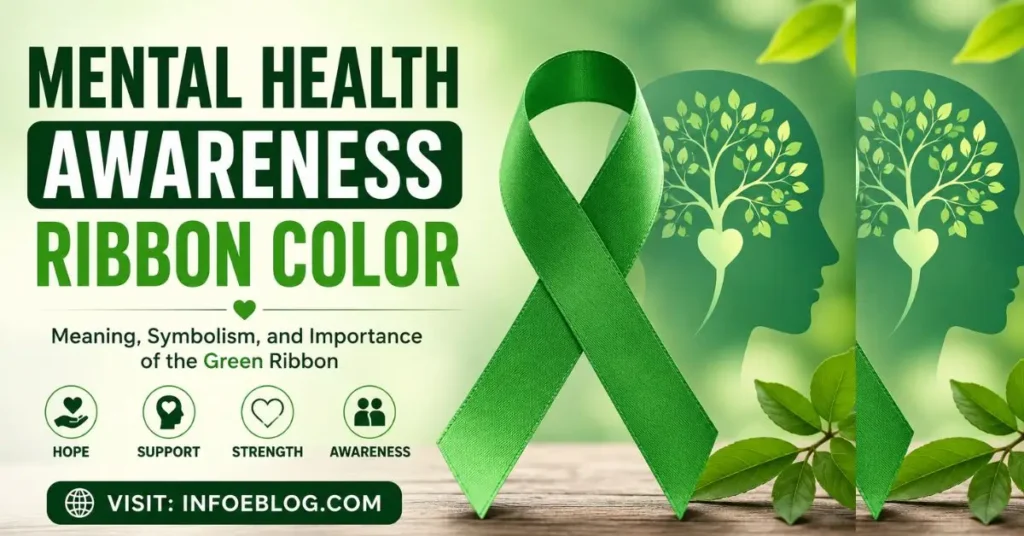
The mental health awareness ribbon color is most commonly green. This color symbolizes hope, strength, healing, and support for people living with mental health challenges. Organizations, schools, workplaces, and advocacy groups use green ribbons to encourage open conversations and reduce stigma around mental illness.
In this guide, you will learn what the green ribbon means, why it became important, how it is used during awareness campaigns, and how different awareness colors can represent emotional well-being.
TL;DR
- Green is the most recognized mental health awareness ribbon color
- It represents hope, healing, strength, and support
- Awareness ribbons help reduce stigma around mental illness
- Mental health campaigns often use ribbons during May, which is Mental Health Awareness Month in the US
- Wearing or sharing a ribbon can help start supportive conversations
What Is the Mental Health Awareness Ribbon?
The awareness ribbon is a simple symbol used to support a cause or movement. For mental health advocacy, the green ribbon has become the most recognized symbol across the United States, Canada, and the UK.
People wear these ribbons to show support for those dealing with anxiety, depression, PTSD, bipolar disorder, stress disorders, and other mental health conditions.
The ribbon also reminds people that emotional struggles are common and that seeking help should never feel shameful.
Why Green Became the Main Color
Green is strongly connected with healing, growth, renewal, and balance. These ideas match the goals of mental health awareness campaigns.
Mental wellness organizations chose green because it creates a calming and supportive feeling. Many experts believe color psychology plays a role in how people emotionally respond to awareness campaigns.
For example:
| Color | Common Emotional Meaning | Connection to Mental Health |
|---|---|---|
| Green | Healing and hope | Recovery and emotional support |
| Blue | Calm and trust | Emotional stability |
| Purple | Strength and compassion | Advocacy and understanding |
Although green is the primary symbol, some campaigns may use other colors for specific conditions or related causes.
The Meaning Behind the Green Ribbon
The green ribbon carries several important messages.
Hope
Many people facing emotional challenges feel isolated or misunderstood. The ribbon reminds them that recovery and support are possible.
Strength
Living with mental health conditions often requires daily emotional resilience. The ribbon recognizes that strength.
Awareness
The symbol encourages conversations about depression, anxiety, trauma, stress, and other mental health concerns.
Support
Friends, family members, teachers, and coworkers often wear ribbons to show solidarity with loved ones experiencing mental health struggles.
Why Mental Health Awareness Matters
Mental health conditions affect millions of people every year. Despite this, many individuals still avoid treatment because of fear, shame, or misunderstanding.
Awareness campaigns help by:
- Encouraging people to seek support earlier
- Reducing social stigma
- Improving education about emotional health
- Promoting community support
- Helping schools and workplaces create healthier environments
In the United States, Mental Health Awareness Month takes place every May. During this period, many organizations distribute green ribbons, host educational events, and share wellness resources online.
How Awareness Ribbons Help Reduce Stigma
For years, mental illness was rarely discussed openly. Many people felt pressure to hide emotional struggles.
Awareness symbols changed slowly over time.
When someone wears a ribbon, posts a supportive message online, or participates in a mental wellness event, it sends a public message that mental health deserves attention and care.
This visibility can help normalize important conversations.
For example, a college student wearing a green ribbon during an awareness event may encourage classmates to discuss stress, burnout, or anxiety more openly.
Even small acts of visibility can make people feel less alone.
Different Mental Health Awareness Colors
While green remains the most recognized mental health awareness ribbon color, some related campaigns use additional shades.
Lime Green
Lime green is sometimes linked with broader mental health initiatives focused on youth awareness and emotional wellness education.
Teal and Purple
Some organizations combine teal and purple to represent suicide prevention awareness and emotional support campaigns.
Blue
Blue may appear in campaigns related to depression awareness, stress reduction, or emotional calmness.
However, green is still considered the standard mental wellness awareness color in most major campaigns.
Mental Health Awareness Month in the US
Mental Health Awareness Month began in 1949 through Mental Health America. Since then, it has become one of the largest awareness movements related to emotional well-being.
Throughout May, organizations often:
- Share mental wellness resources
- Encourage therapy and counseling support
- Promote workplace mental health initiatives
- Host school awareness events
- Raise funds for advocacy programs
Green ribbons appear during many of these campaigns because they provide a simple and recognizable symbol of support.
Real-World Example of Awareness in Action
A good example comes from many US high schools and colleges that organize “Green Out” events during Mental Health Awareness Month.
Students wear green shirts, ribbons, or bracelets while schools host wellness workshops and peer support discussions.
These events help younger audiences understand that stress, anxiety, and emotional challenges are normal human experiences that deserve healthy support systems.
Simple awareness activities like these can encourage students to seek help earlier instead of suffering silently.
How People Use Mental Health Awareness Ribbons
The ribbon appears in many forms beyond clothing.
People commonly use it on:
- Social media profile pictures
- Awareness bracelets
- Charity campaigns
- Community walks
- School events
- Workplace wellness programs
- Fundraising merchandise
Some people also place ribbon magnets on cars or include awareness symbols in mental health fundraising materials.
The goal is not just decoration. The symbol exists to start conversations and spread understanding.
Should You Wear a Mental Health Awareness Ribbon?
Wearing a ribbon is a personal choice, but many people see it as a respectful and supportive gesture.
It can help show:
- Compassion for others
- Support for emotional wellness
- Advocacy for better mental health resources
- Openness to conversation
However, awareness symbols are most meaningful when paired with real action.
Supporting mental wellness may also include:
- Listening without judgment
- Encouraging professional help
- Learning about mental health conditions
- Supporting community resources
Common Misunderstandings About Awareness Ribbons
“A ribbon alone solves nothing.”
That is true. A ribbon cannot replace therapy, treatment, or professional care. However, symbols can increase visibility and encourage conversations that lead people toward support.
“Only people with mental illness wear them.”
Many supporters wear ribbons even if they do not personally struggle with mental health conditions. Friends, parents, teachers, healthcare workers, and advocates often participate.
“All green ribbons mean the same thing.”
Green ribbons can represent different causes depending on context. Still, mental wellness awareness remains one of the most recognized meanings.
How Social Media Increased Mental Health Awareness
Social media has played a major role in expanding mental health conversations.
Hashtags, awareness campaigns, and educational creators now help millions of people access emotional wellness information quickly.
During awareness months, many users share:
- Green ribbon graphics
- Personal recovery stories
- Therapy resources
- Stress management tips
- Support hotline information
While social media cannot replace professional treatment, it has helped reduce silence around emotional struggles.
Ways to Support Mental Health Awareness
You do not need to organize a large campaign to make a positive impact.
Simple actions can help:
Learn About Mental Health
Understanding common conditions like anxiety or depression helps reduce harmful stereotypes.
Speak Respectfully
Avoid dismissive language about emotional struggles.
Support Local Programs
Many communities offer mental wellness events, support groups, or nonprofit services.
Encourage Professional Help
Therapists, counselors, and healthcare providers can offer important support when someone is struggling.
Check In on Others
Sometimes a simple conversation makes a meaningful difference.
FAQs
What color ribbon represents mental health awareness?
The green ribbon is the most recognized symbol for mental health awareness. It represents healing, hope, emotional strength, and support for people facing mental health challenges.
Green became widely associated with mental wellness campaigns because it reflects growth, renewal, and balance. Many organizations use green during Mental Health Awareness Month and other advocacy events.
Why is green used for mental health awareness?
Green is often connected with calmness, healing, and renewal. These emotional associations match the goals of mental wellness advocacy and recovery support.
Mental health campaigns use green to encourage understanding, reduce stigma, and promote positive conversations about emotional well-being.
Is there an official mental health awareness ribbon color?
There is no single worldwide authority that controls awareness ribbon colors, but green is generally accepted as the primary color for mental health awareness.
Most major campaigns in the US, UK, and Canada use green ribbons during awareness events and educational programs.
What does wearing a green ribbon mean?
Wearing a green ribbon usually shows support for mental health awareness and emotional wellness advocacy. It may also honor loved ones affected by mental illness.
Many people wear ribbons during awareness events, school programs, workplace campaigns, and fundraising activities.
Are there different ribbons for specific mental health conditions?
Yes. Some organizations use different colors for specific causes related to emotional wellness or suicide prevention awareness.
However, the green ribbon remains the most common general symbol for mental health awareness and support.
Final Thoughts
The mental health awareness ribbon color may seem like a small symbol, but its meaning carries real emotional value for many people. The green ribbon represents hope, compassion, healing, and the idea that no one should face emotional struggles alone.
Awareness alone cannot solve mental health challenges, but open conversations can help reduce stigma and encourage people to seek support earlier. Even small gestures of understanding can make a difference.
If you found this guide helpful, consider sharing it with someone who wants to learn more about mental wellness awareness and advocacy
Also read this: